Private equity has quietly become one of the most influential forces reshaping the global tech industry. What was once a market dominated by venture capital is now witnessing a major shift toward private equity firms acquiring mature startups in AI, fintech, and SaaS. These firms are transforming the growth model for technology companies, offering operational discipline, profitability, and long-term stability at a time when founders and investors increasingly demand sustainable outcomes.

As the tech ecosystem evolves beyond the era of “growth at any cost,” private equity has emerged as the preferred partner for companies that have strong products but need structure, strategy, and financial clarity to scale responsibly. Buyouts are no longer about rescuing struggling firms—they are the new growth play for tech businesses ready for their next phase.
Why Private Equity Is Rapidly Expanding Into Tech
Several global shifts have accelerated private equity’s interest in the tech sector: rising operational costs, pressure for profitability, and the need for stable long-term growth models. For years, startups relied heavily on venture capital to chase aggressive expansion targets. But as markets matured, private equity firms recognized that many tech companies had solid fundamentals—recurring revenue, proven demand, and strong customer retention—yet lacked the systems needed to grow efficiently.
Private equity brings that missing piece. These firms excel at building operational frameworks, optimizing financial structures, and guiding companies toward consistent profitability. In high-potential sectors like AI, fintech, and SaaS, private equity saw a perfect match: innovation paired with the opportunity for scalable, predictable returns.
The rise of AI and automation has amplified this trend. Private equity firms are not just investing—they’re strategically acquiring AI-driven companies to strengthen their broader portfolios. By integrating AI capabilities into various industries, they accelerate efficiencies across multiple business lines.
Why Buyouts Became the New Growth Strategy
Traditional startup growth relied on back-to-back funding rounds, rapid hiring, and aggressive user acquisition. But in today’s landscape, raising endless capital is no longer viable or attractive. Private equity buyouts emerged as the smarter alternative because they solve a persistent challenge—balancing innovation with efficient execution.
Many startups reach a maturity point where scaling requires more than capital. They need leadership restructuring, refined pricing strategies, detailed financial planning, and operational excellence. Private equity brings these elements through a proven playbook focused on sustainability, not burn rates.
This trend is especially strong among SaaS companies, where metrics like ARR, churn, and CAC dictate valuation. Private equity firms specialize in tightening these numbers, transforming good SaaS businesses into exceptional ones.
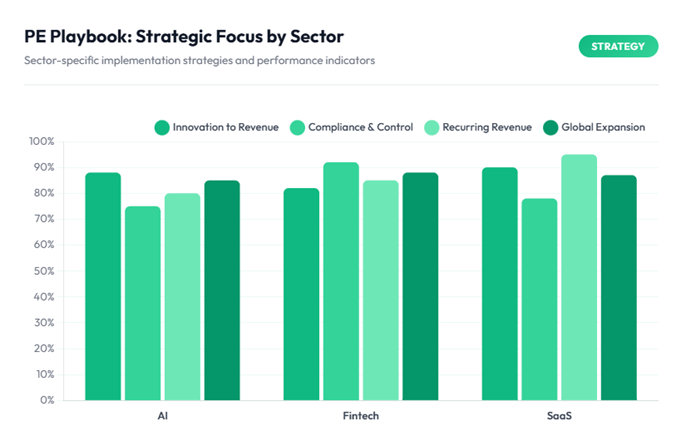
The Private Equity Playbook for AI, Fintech, and SaaS
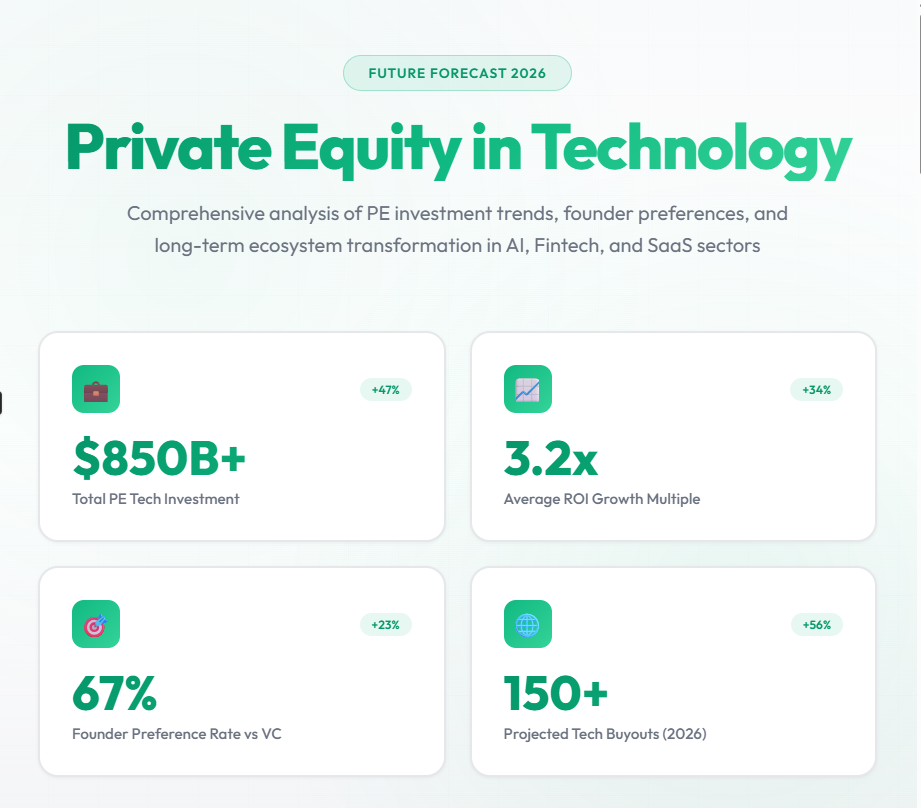
Tech sectors with recurring revenue, strong data moats, and high automation potential have become top targets for private equity. AI, fintech, and SaaS stand out as the most attractive categories.
AI: Turning Innovation Into Scalable Revenue
AI companies often build world-class products but struggle to commercialize them effectively. Private equity firms identify these gaps and apply structured go-to-market strategies, optimized pricing, and enterprise partnerships.
Many private equity groups also integrate AI solutions across their wider portfolios to improve automation, customer support, analytics, and process efficiency—creating value on multiple fronts.
Fintech: Scaling With Compliance and Control
Fintech startups grow fast but often hit regulatory barriers, limiting expansion. Private equity firms bring deep financial and compliance expertise, enabling fintech companies to strengthen governance frameworks and scale with confidence.
With enhanced compliance and risk management, fintech firms gain better access to banking partnerships, enterprise clients, and cross-border growth opportunities.
SaaS: The Recurring Revenue Engine
Private equity’s interest in SaaS is driven by recurring revenue, stable cash flow, and predictable long-term value. Once acquired, private equity firms fine-tune SaaS operations by:
- optimizing subscription models
- reducing churn
- improving customer experience
- strengthening support and product roadmaps
- expanding global distribution
This creates stronger unit economics and generates reliable returns.
Why Founders Are Choosing Private Equity Over Venture Capital
Founders have become increasingly strategic about the type of capital they bring into their businesses. Many now view private equity as the more attractive path forward.
1. Liquidity without losing the company entirely
Many deals allow founders to retain a meaningful stake while gaining new financial strength and expertise.
2. A path to profitability instead of endless fundraising
Private equity focuses on sustainable performance rather than vanity metrics.
3. Access to global scale through PE networks
Private equity firms open doors to international markets, enterprise customers, and strategic partnerships.
4. Less pressure for unrealistic hypergrowth
Founders appreciate a growth plan grounded in operational reality.
The mindset has shifted: responsible, strategic scaling matters more than chasing inflated valuations.
What Private Equity Buyouts Mean for Employees
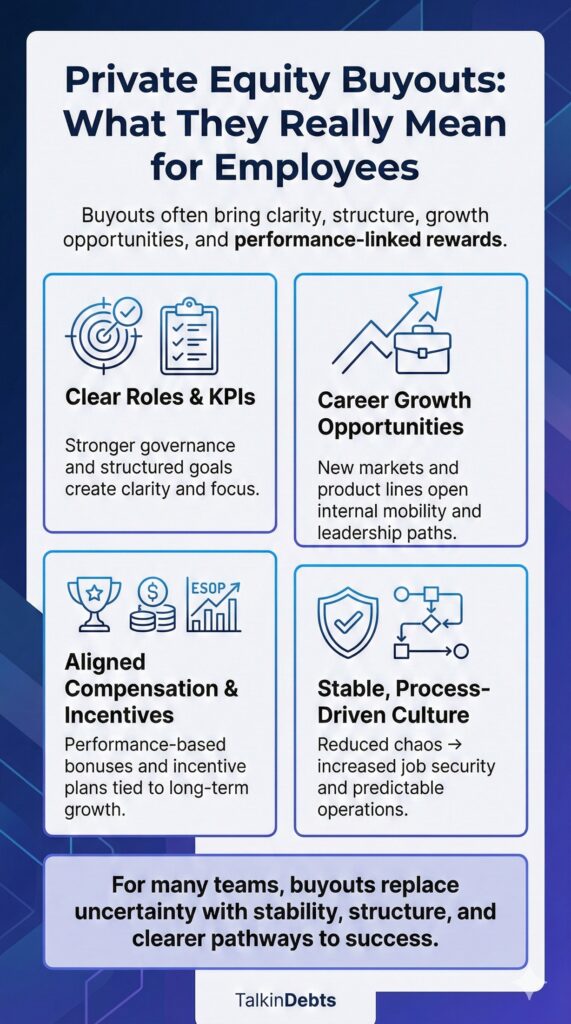
While employees may feel uncertain during buyouts, the reality is often positive—driven by structure, stability, and clearer expectations.
More Defined Roles and KPIs
Private equity firms establish stronger systems, governance, and performance measurement. Teams operate with clarity, purpose, and defined goals.
Better Opportunities for Career Advancement
As companies grow into new markets and product lines, employees often benefit from expanded leadership roles and internal mobility.
Compensation Alignment and Incentives
Private equity introduces performance-based bonuses, revised ESOP structures, and long-term incentives tied to company growth.
Stable, Process-Driven Culture
While startup flexibility may be reduced, employees gain long-term job stability and operational consistency—factors increasingly valued across the tech workforce.
The Long-Term Impact on the Tech Ecosystem
The rise of private equity in tech is reshaping the future of startup growth models. It marks a shift toward disciplined, sustainable scaling and away from speculative growth strategies.
This transformation introduces several long-term changes:
- stronger, more efficient business models
- consolidation that strengthens competition
- a decline in inflated unicorn valuations
- increased focus on profitability and revenue quality
- founders reinvesting their buyout capital into new ventures
- improved global expansion frameworks
Private equity is redefining what it means to grow a tech company. For many startups, acquisition by a private equity firm is not the end—it is the beginning of a more structured, scalable, and profitable chapter. This new growth playbook is becoming the dominant strategy for tech leaders seeking long-term success.