
Global startups are turning to venture debt in record numbers as equity markets tighten. From Silicon Valley to Dubai and Berlin, founders are increasingly opting for non-dilutive capital to fuel growth without giving up control.
Global Surge in Venture Debt Deals
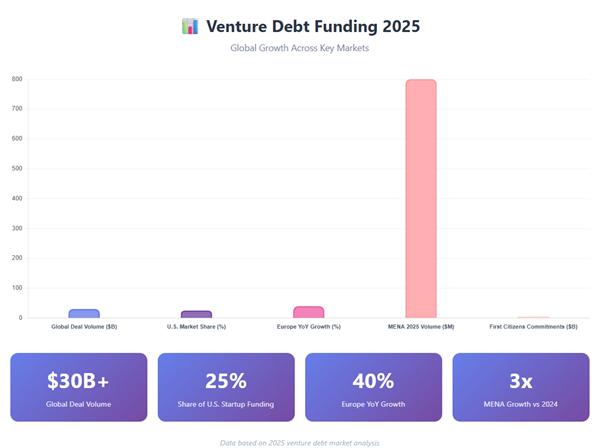
Venture debt funding has surged to historic highs in 2025, with global deal volumes surpassing $30 billion across the U.S., Europe, and MENA regions. According to industry analysts, the rise marks a clear shift in startup financing behavior as founders seek alternatives to equity amid higher interest rates and tighter VC terms.
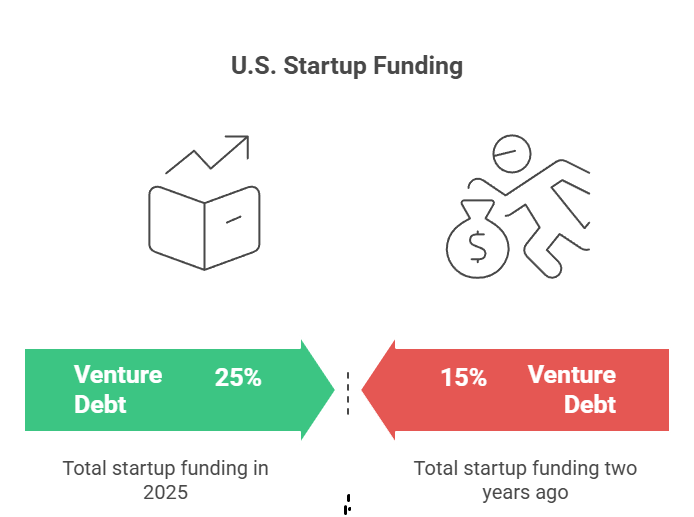
In the U.S., venture debt deals accounted for nearly 25% of total startup funding in the first three quarters of 2025, compared to just 15% two years ago. This uptick follows the restructuring of Silicon Valley Bank’s lending operations and the entry of new players in the venture debt ecosystem, including fintech lenders, private credit funds, and successor institutions formed after the SVB collapse.
Across Europe, specialized lenders in London, Berlin, and Paris have expanded their venture debt portfolios by over 40% year-on-year, driven by demand from Series B and C startups. Meanwhile, MENA’s venture debt scene—once a niche—has grown exponentially with the rise of regional fintechs offering flexible repayment structures tailored for fast-scaling companies.
Startups Turn to Non-Dilutive Capital
For many founders, venture debt offers a strategic advantage: access to growth capital without surrendering equity or control. Startups in SaaS, healthtech, and climate tech sectors are leading this trend, using venture debt to extend runway and reach profitability milestones before their next equity round.
“Raising equity in today’s market often comes with steep valuation cuts,” said a senior partner at a U.S.-based venture debt fund. “Venture debt allows founders to stay in control while still achieving growth targets.”
In the current funding climate, where venture capital has become selective, non-dilutive financing is increasingly viewed as the smarter bridge between rounds. Startups are using venture debt for working capital, equipment financing, and strategic acquisitions—a move that keeps ownership intact and dilution minimal.
Silicon Valley Banks’ Successors Lead the U.S. Market
The U.S. venture debt ecosystem underwent a major transformation following the 2023 Silicon Valley Bank collapse. Its successors—First Citizens Bank, Bridge Bank, and a handful of fintech entrants—have since filled the void, introducing innovative lending frameworks designed for the startup economy.
First Citizens Bank, now one of the largest venture lenders in North America, has reportedly closed more than $5 billion in new venture debt commitments in 2025 alone. Similarly, Bridge Bank has expanded its startup-focused lending portfolio, offering hybrid structures that blend debt with revenue-based financing models.
Fintechs like Mercury and Brex have also stepped into the credit space, offering venture debt-like products through digital-first platforms. Their entry has intensified competition, driving better rates and more flexible repayment terms for founders.
Europe’s Growing Appetite for Venture Debt
In Europe, venture debt has rapidly evolved from a niche financial instrument to a mainstream funding strategy. Traditional banks like HSBC Innovation Banking and specialized lenders such as Kreos Capital and Claret Capital have reported record deployment in 2025.
London remains Europe’s venture debt capital, accounting for nearly half of the region’s deals. Berlin and Paris are close behind, with several large-scale transactions in fintech, AI, and deep tech. A notable example includes a €60 million facility secured by a German AI startup to fund expansion into the U.S.
European investors are also drawn to venture debt for its risk-adjusted returns, which often outperform traditional fixed-income instruments. As venture capital slows, debt lenders are stepping up as critical growth enablers for late-stage companies seeking capital efficiency.
MENA Region Joins the Venture Debt Boom
The Middle East and North Africa (MENA) region, traditionally reliant on equity-heavy funding, has recently embraced venture debt as part of its maturing startup ecosystem. The UAE, Saudi Arabia, and Egypt have seen a wave of local fintech lenders entering the space, backed by sovereign funds and regional banks.
In Dubai, several venture debt facilities have been launched to support high-growth fintech and logistics startups. Abu Dhabi’s tech ecosystem, supported by the Abu Dhabi Investment Office (ADIO), has also seen an uptick in debt-backed growth financing.
“The MENA region’s venture debt market is at a tipping point,” said a partner at a UAE-based venture debt firm. “Founders here are becoming more sophisticated in their capital strategy—they understand the power of leverage without dilution.”
According to recent data, venture debt activity in MENA has tripled in 2025 compared to the previous year, reaching $800 million in total commitments.
Sectors Driving the Surge
Certain sectors are fueling the global rise in venture debt demand. SaaS, fintech, and healthtech continue to dominate, followed by clean energy and mobility startups.
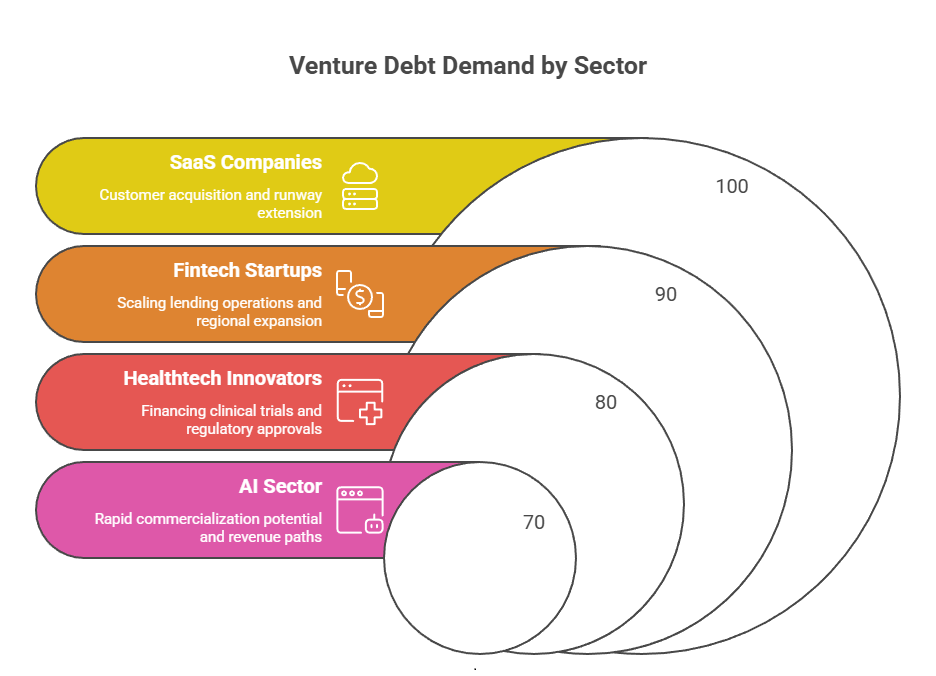
- SaaS companies use venture debt to fund customer acquisition and extend runway between equity rounds.
- Fintech startups leverage it to scale lending operations and expand regionally.
- Healthtech innovators tap into venture debt to finance clinical trials and regulatory approvals.
Meanwhile, the AI sector has emerged as a new favorite for lenders, given its rapid commercialization potential. Debt providers see AI startups as lower-risk borrowers with clear paths to revenue.
Fintech Lenders Redefine Venture Debt
The rise of fintech lenders has democratized access to venture debt. Platforms like Pipe, Capchase, and Arc are offering revenue-based financing—a flexible variant of venture debt that ties repayments to monthly revenue performance rather than fixed interest schedules.
This approach is particularly attractive to SaaS founders who prefer predictable, non-dilutive capital aligned with recurring revenue streams. Many fintech lenders also use AI-driven credit assessments to underwrite startups faster and with greater accuracy than traditional banks.
By combining automation, data analytics, and alternative metrics like ARR and churn rate, fintech lenders are redefining how growth-stage startups secure capital.
Why 2025 Is the Year of Venture Debt
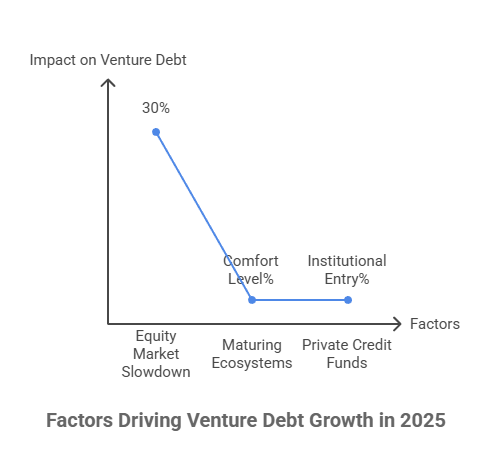
Three factors have made 2025 a watershed year for venture debt funding:
- Equity Market Slowdown: With valuations correcting and venture capital funding volumes down nearly 30%, startups are turning to debt as a strategic bridge.
- Maturing Ecosystems: Founders and investors alike are now more comfortable integrating debt into funding strategies.
- Institutional Entry: Private credit funds and alternative asset managers are entering the market, increasing liquidity and competition.
According to PitchBook data, venture debt is expected to account for over $50 billion in global startup financing by the end of 2025, making it one of the fastest-growing asset classes in private markets.
Challenges Ahead
Despite the enthusiasm, experts warn that venture debt comes with risks. Improperly structured loans can strain startups’ cash flow or limit future fundraising flexibility. Startups must carefully evaluate debt terms, interest rates, and covenants before signing.
Moreover, with rising interest rates, repayment burdens can be heavier than anticipated. Some lenders have begun offering convertible debt or warrant-linked structures to align incentives with startups’ success.
Still, for well-managed, revenue-generating startups, venture debt remains a valuable strategic tool—especially when used to complement equity rather than replace it.
Outlook: The Future of Startup Financing
The outlook for venture debt funding in 2026 and beyond remains bullish. As global venture capital continues its cautious stance, non-dilutive capital will remain central to startup growth strategies.
Analysts predict that by 2027, one in every three startups raising capital will include a venture debt component in their financing mix. Lenders are expected to innovate further, introducing hybrid products blending equity, revenue-based finance, and traditional debt—offering startups even more flexibility.
From Silicon Valley’s fintech corridors to Dubai’s innovation hubs, venture debt has officially graduated from an alternative financing option to a core pillar of startup funding strategy.
As founders learn to balance equity and debt intelligently, the 2025 venture debt boom marks not just a trend—but a fundamental shift in how the global startup ecosystem sustains growth.