March 2026 —
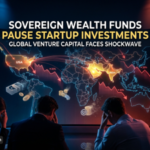
A sharp shift in global capital flows is sending shockwaves through the startup ecosystem, as sovereign wealth funds from the Gulf region slow down or temporarily pause venture capital investments amid escalating geopolitical tensions in the Middle East.
These funds—long regarded as among the most powerful drivers of global startup funding—are now reassessing their capital allocation strategies, placing greater emphasis on liquidity, risk management, and domestic economic priorities over aggressive international expansion.
This emerging trend signals a critical turning point for global venture capital, particularly as Gulf sovereign investors have played a dominant role in large funding rounds over the past decade.
Strategic Pause Signals Growing Market Caution
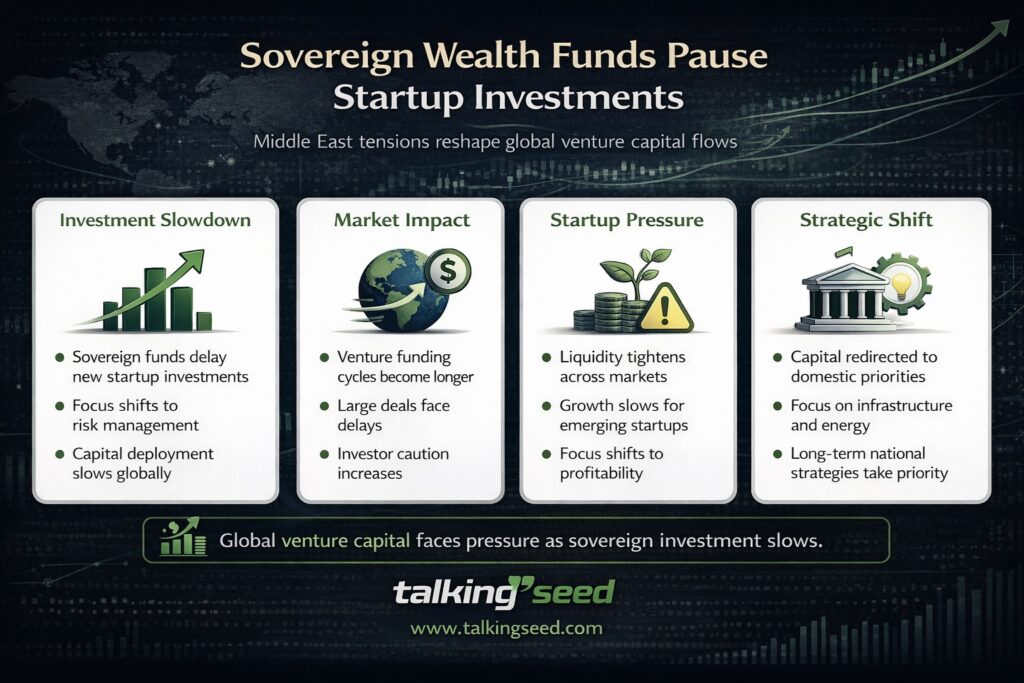
The intensifying regional conflict has forced sovereign wealth funds (SWFs) to adopt a more cautious investment stance. Traditionally known for their diversified global portfolios, these investors are now prioritizing capital preservation.
Market experts describe the move as a “strategic pause” rather than a full withdrawal.
Instead of committing to new startup investments at scale, many funds are delaying deal closures, tightening due diligence processes, and reassessing risk exposure across international markets.
This shift reflects a broader trend where geopolitical instability directly influences global capital deployment decisions.
Gulf Sovereign Wealth Funds: A Backbone of Global Venture Capital
Over the past decade, Gulf sovereign wealth funds have become a cornerstone of global venture capital. Their ability to deploy large amounts of capital quickly has enabled startups to scale at unprecedented speed.
These funds have been particularly active in sectors such as:
- Artificial Intelligence
- Fintech
- E-commerce
- Mobility and logistics
- Climate technology
Their participation has often defined the success of late-stage funding rounds, providing both financial backing and market confidence.
With this capital now slowing, the effects are expected to ripple across the entire startup ecosystem.
Global Startup Ecosystems Begin to Feel the Pressure
The impact of reduced sovereign investment is already visible across major global startup hubs.
United States and Europe
Startups in mature markets are experiencing longer fundraising cycles, with investors becoming more cautious and selective. Several late-stage deals have reportedly been delayed as uncertainty grows.
India and Emerging Markets
Emerging markets, including India, are particularly vulnerable. These regions have benefited significantly from Gulf capital inflows in recent years.
A slowdown in funding could lead to tighter liquidity conditions, forcing startups to shift focus toward sustainability, cost efficiency, and profitability rather than aggressive expansion.
Venture Capital Firms Face a Funding Crunch
The slowdown is also affecting venture capital firms, many of which rely on sovereign wealth funds as limited partners (LPs).
When these large investors pause commitments:
- New fund launches may be delayed
- Existing funds may reduce investment sizes
- Risk appetite across the ecosystem declines
This creates a cascading effect, impacting startups at all stages, including early-stage companies that indirectly depend on the broader funding environment.
Shift Toward Domestic and Strategic Investments
Rather than withdrawing completely, sovereign wealth funds are redirecting capital toward domestic and strategic priorities.
This includes:
- Infrastructure development
- Energy security
- National economic diversification
- Strategic industries aligned with long-term policy goals
During periods of geopolitical tension, such a shift is common, as sovereign investors prioritize national resilience over global expansion.
Startup Valuations Under Increasing Pressure
One of the most immediate consequences of reduced sovereign participation is downward pressure on startup valuations.
These funds have historically:
- Led large funding rounds
- Supported higher valuations
- Provided stability during uncertain market conditions
With their reduced presence, startups are now facing:
- Lower valuations
- Stricter investment terms
- Increased scrutiny from investors
This may accelerate a broader correction in global technology valuations.
Founders Adjust to a New Reality
Startup founders are rapidly adapting to the changing funding environment.
Key strategic shifts include:
- Extending financial runway
- Cutting operational costs
- Focusing on profitability and unit economics
- Delaying expansion plans
Many startups are also exploring alternative funding sources such as private equity firms, corporate investors, and family offices. However, replacing sovereign capital remains a significant challenge due to its scale and flexibility.
Alternative Capital Sources Attempt to Fill the Gap
As sovereign wealth fund investments slow, other capital providers are stepping in, including:
- Institutional investors
- Private equity firms
- Family offices
- Corporate investment arms
However, industry analysts note that these players cannot fully replicate the scale, long-term vision, and risk tolerance of sovereign wealth funds.
Temporary Disruption or Long-Term Shift?
A key question facing the global startup ecosystem is whether this slowdown is temporary or signals a structural shift.
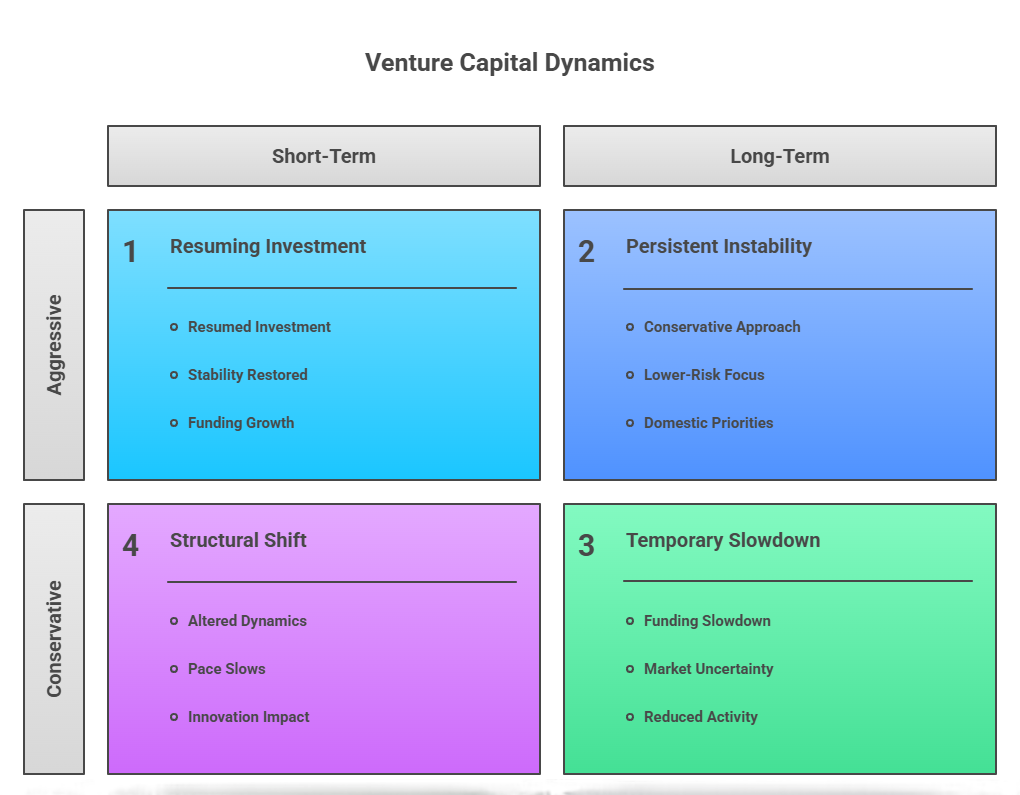
Short-Term Scenario
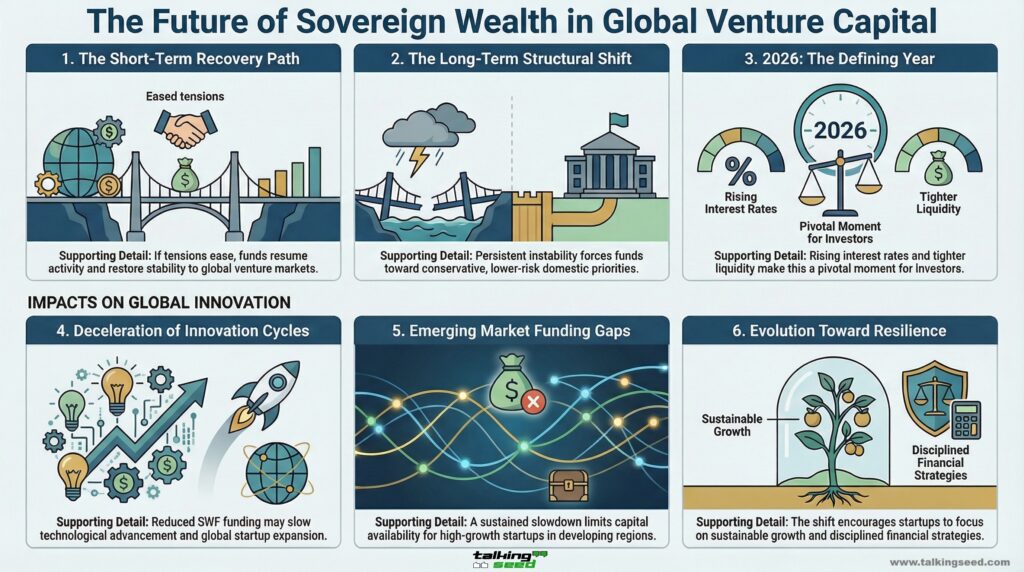
If geopolitical tensions ease, sovereign wealth funds may resume investment activity, restoring stability to venture markets.
Long-Term Scenario
If instability persists, funds may adopt a more conservative investment approach, focusing on lower-risk opportunities and domestic priorities.
Such a shift could permanently alter global venture capital dynamics.
Broader Implications for Global Innovation
Sovereign wealth funds have played a crucial role in driving global innovation by funding high-growth startups and emerging technologies.
Their investments have:
- Accelerated innovation cycles
- Enabled the global expansion of startups
- Bridged funding gaps in emerging markets
A sustained slowdown could therefore impact not only funding availability but also the pace of technological advancement worldwide.
A Pivotal Moment for the Startup Economy
The pause in sovereign wealth fund investments comes at a time when the global startup ecosystem is already under pressure from rising interest rates, tighter liquidity, and increased investor scrutiny.
The added uncertainty from geopolitical tensions could intensify these challenges, making 2026 a defining year for startups and investors.
What Lies Ahead
Despite the challenges, this shift may lead to a healthier and more disciplined venture capital environment.
Startups are likely to become more resilient by focusing on sustainable growth, while investors may adopt more balanced and strategic investment approaches.
Final Word
The slowdown in sovereign wealth fund investments highlights the deep connection between geopolitics and global financial markets.
As these influential investors reassess their strategies, the effects are being felt across global startup ecosystems, venture capital markets, and innovation hubs.
Whether this is a temporary pause or a long-term transformation, one thing is clear: the global venture capital landscape is entering a new phase—one defined by caution, recalibration, and strategic realignment.