The global energy market is once again under intense pressure as escalating conflict in the Middle East sends shockwaves across oil supply chains, pricing structures, and long-term energy strategies. Historically, geopolitical instability in the region has had immediate and far-reaching consequences for global energy markets. However, the latest wave of disruption is triggering something deeper and more structural: a rapid acceleration in investments toward climate technology, energy startups, and resilient infrastructure.
Energy Turbulence Boosts Climate Tech Startup Investment
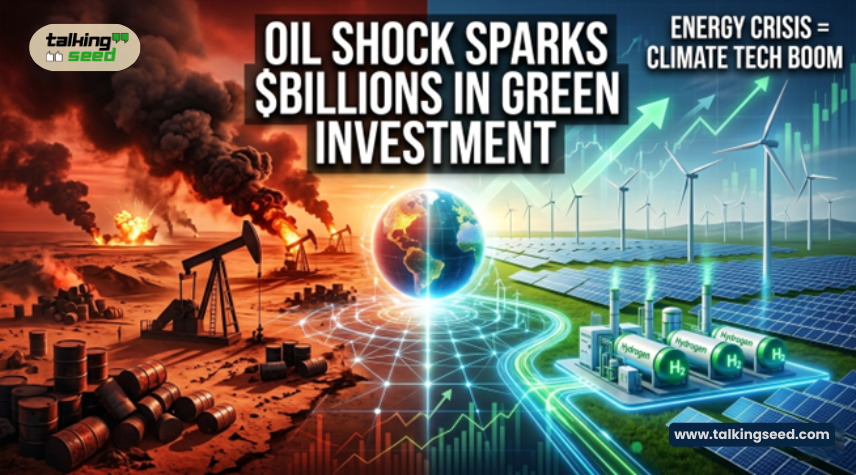
As oil prices spike and supply uncertainty grows, governments, investors, and corporations are rethinking their dependence on fossil fuels. This shift is not just reactive—it is strategic. The turbulence is acting as a catalyst for innovation, channeling capital into alternative energy solutions, decentralized power systems, and next-generation climate technologies.
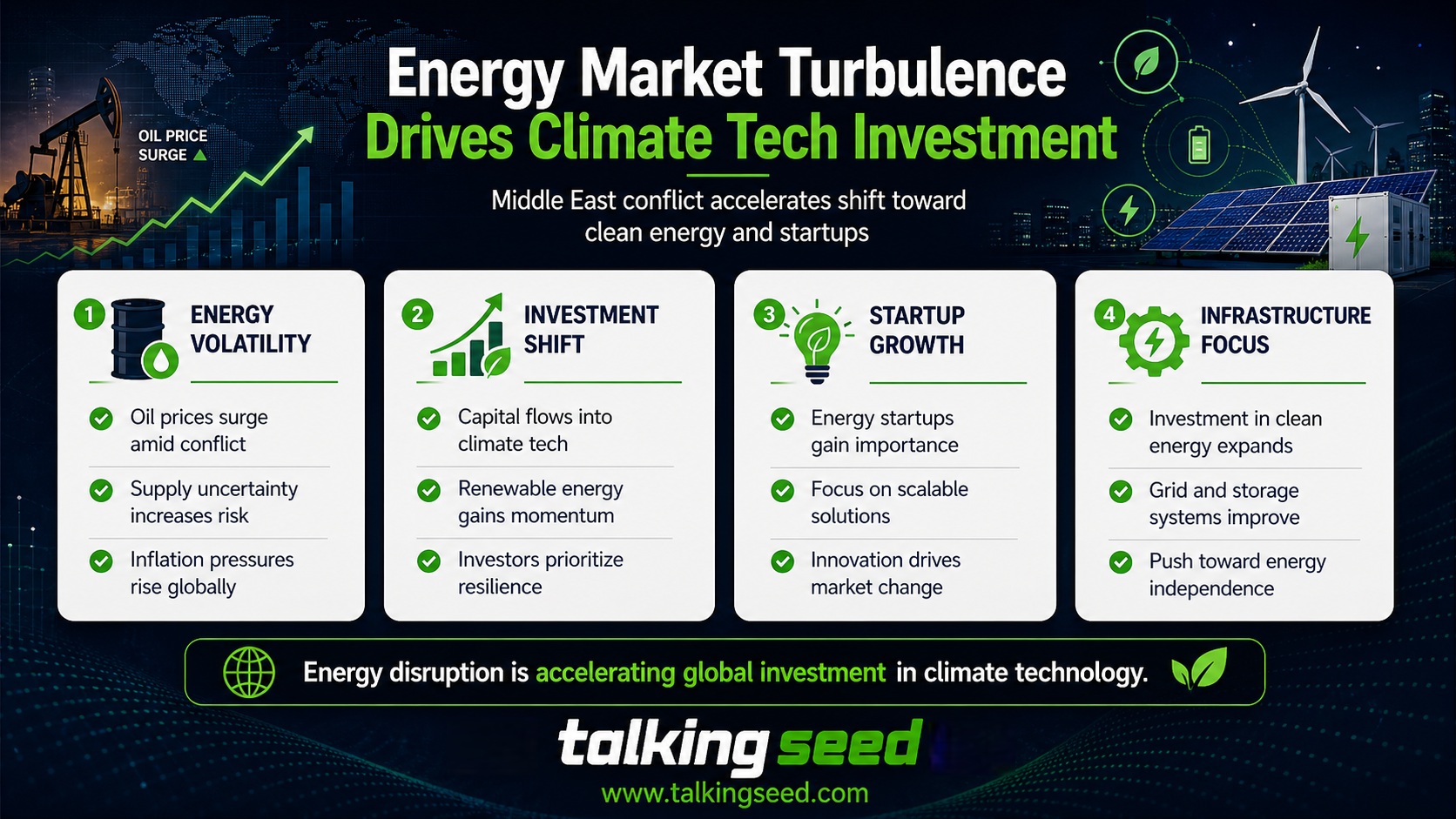
Oil Price Volatility Sparks Urgency
Energy markets have always been sensitive to geopolitical developments in the Middle East, a region responsible for a significant share of global oil production. With renewed conflict disrupting supply routes and creating uncertainty, crude oil prices have surged, triggering inflationary pressures worldwide.
This volatility has exposed the fragility of traditional energy systems. Countries heavily reliant on imported oil are facing rising costs, while industries dependent on stable energy pricing are grappling with unpredictability. For policymakers and investors alike, this has reinforced a critical realization: energy security can no longer rely solely on fossil fuels.
The immediate response has been a surge in demand for alternative energy solutions that offer stability, scalability, and independence from geopolitical risks.
Climate Tech Investment Reaches New Highs
In the face of energy uncertainty, climate technology has emerged as a key beneficiary. Venture capital firms and institutional investors are increasingly channeling funds into startups focused on renewable energy, carbon capture, energy storage, and grid optimization.
Climate tech venture capital is witnessing record inflows, driven by both necessity and opportunity. Investors are recognizing that the transition to clean energy is not just an environmental imperative—it is also a strategic hedge against geopolitical instability.
Startups developing solar, wind, and hydrogen technologies are attracting significant attention. At the same time, innovations in battery storage and smart grid systems are gaining traction, as they address one of the biggest challenges in renewable energy: reliability.
This shift in investment patterns reflects a broader transformation in how energy risk is perceived. Instead of viewing clean energy as a long-term goal, it is now being treated as an immediate solution to present-day challenges.
Energy Startups Gain Strategic Importance
The current crisis has elevated the role of energy startups from niche innovators to critical players in the global energy ecosystem. These companies are not just developing new technologies—they are redefining how energy is produced, distributed, and consumed.
Startups focusing on decentralized energy systems, such as microgrids and peer-to-peer energy trading platforms, are gaining momentum. These solutions reduce reliance on centralized infrastructure, making energy systems more resilient to disruptions.
Additionally, companies working on energy efficiency technologies are seeing increased demand. From AI-driven energy management systems to smart building solutions, these innovations help reduce overall energy consumption, easing pressure on strained supply chains.
Investors are particularly interested in startups that can deliver both sustainability and scalability. The ability to rapidly deploy solutions in response to market disruptions has become a key differentiator in the current landscape.
Infrastructure Investment Trends Shift Rapidly
Beyond startups, large-scale infrastructure investments are also undergoing a significant transformation. Governments and private sector players are accelerating funding for renewable energy projects, grid modernization, and energy storage facilities.
One of the most notable trends is the shift toward energy independence. Countries are investing heavily in domestic energy production capabilities, reducing their exposure to volatile international markets. This includes expanding solar and wind capacity, as well as exploring emerging technologies like green hydrogen.
Grid resilience has also become a top priority. Aging infrastructure is being upgraded to accommodate renewable energy sources and ensure stability during periods of high demand or supply disruption. Investments in digital grid technologies are enabling better monitoring and management of energy flows, enhancing overall system efficiency.
These infrastructure developments are not just reactive measures—they are laying the foundation for a more sustainable and secure energy future.
Venture Capital Adapts to New Realities
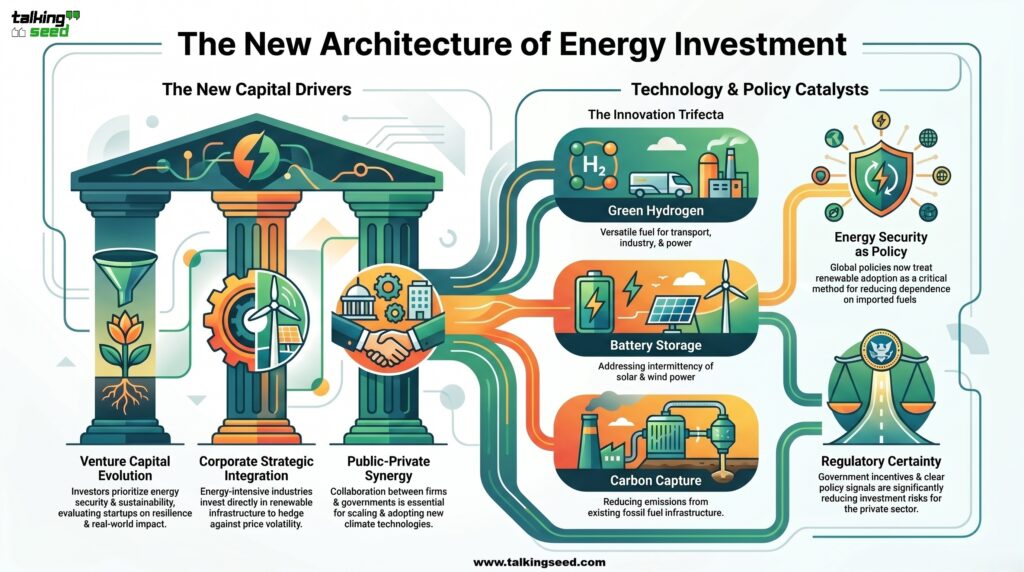
The venture capital landscape is evolving in response to the changing energy dynamics. Investors are increasingly prioritizing startups that align with themes of energy security, sustainability, and technological innovation.
Climate tech venture capital is no longer a niche segment—it is becoming a central pillar of investment strategies. Funds are being allocated to a wide range of sectors, including renewable energy, electric mobility, carbon management, and sustainable materials.
This shift is also influencing how startups are evaluated. Investors are placing greater emphasis on resilience, scalability, and the ability to operate in volatile market conditions. Companies that can demonstrate real-world impact and adaptability are attracting premium valuations.
Moreover, collaboration between venture capital firms, governments, and corporations is becoming more common. Public-private partnerships are playing a crucial role in scaling climate technologies and accelerating their adoption.
Corporate Investment in Clean Energy Accelerates
Large corporations are also stepping up their investments in clean energy and climate technology. Faced with rising energy costs and increasing regulatory pressure, companies are seeking to secure stable and sustainable energy sources.
Many organizations are investing directly in renewable energy projects, either through partnerships or by developing their own infrastructure. Corporate venture arms are actively funding startups that align with their energy transition goals.
This trend is particularly evident in energy-intensive industries such as manufacturing, transportation, and technology. Companies are not only looking to reduce their carbon footprint but also to protect themselves from energy price volatility.
The integration of clean energy into corporate strategies is creating new opportunities for startups and driving further innovation in the sector.
Emerging Technologies Take Center Stage
The current energy crisis is accelerating the adoption of emerging technologies that were previously considered experimental or long-term solutions. Among these, green hydrogen, advanced battery storage, and carbon capture technologies are gaining significant attention.
Green hydrogen, in particular, is being viewed as a potential game-changer. It offers a clean and versatile energy source that can be used across various sectors, including transportation, industry, and power generation.
Advanced battery technologies are addressing the intermittency issues associated with renewable energy. By enabling efficient energy storage, these solutions ensure a stable supply even when solar or wind generation fluctuates.
Carbon capture and storage technologies are also gaining traction, as they provide a way to reduce emissions from existing fossil fuel infrastructure while the transition to clean energy continues.
These innovations are attracting substantial investment, as they hold the potential to reshape the global energy landscape.
Global Policy Shifts Reinforce Momentum
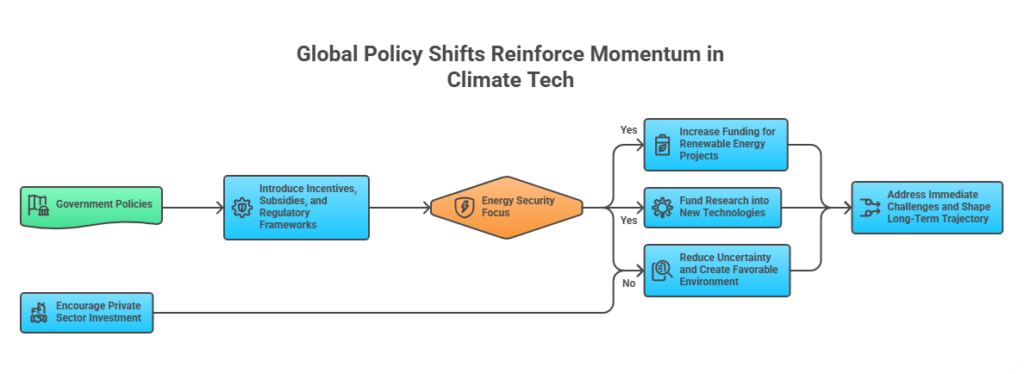
Government policies are playing a crucial role in driving investment in climate tech and energy startups. In response to the current crisis, many countries are introducing incentives, subsidies, and regulatory frameworks to support clean energy adoption.
Energy security has become a central theme in policy discussions, with a growing emphasis on reducing dependence on imported fossil fuels. This is leading to increased funding for renewable energy projects and research into new technologies.
Regulatory support is also encouraging private sector investment. Clear policy signals are reducing uncertainty and creating a more favorable environment for innovation.
These policy shifts are not only addressing immediate challenges but also shaping the long-term trajectory of the energy sector.
A Structural Shift in the Energy Landscape
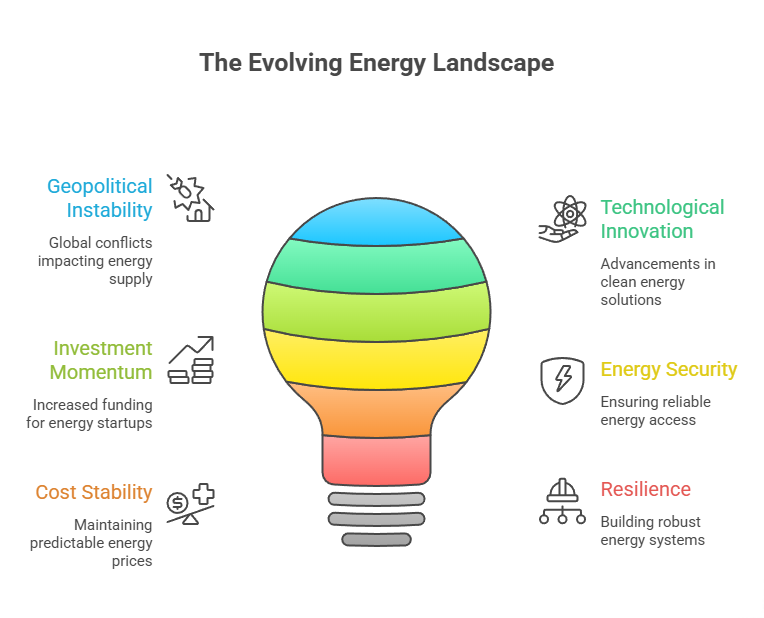
The ongoing turbulence in the energy market is more than a temporary disruption—it is a turning point. The convergence of geopolitical instability, technological innovation, and investment momentum is driving a structural shift in how energy systems are designed and operated.
The transition to clean energy is no longer driven solely by environmental concerns. It is being propelled by economic and strategic imperatives. Energy security, cost stability, and resilience are becoming key drivers of decision-making.
As a result, climate tech and energy startups are moving to the forefront of the global energy transition. Their role in shaping the future of energy is becoming increasingly significant.
What This Means for the Future
The ripple effects of the Middle East conflict are likely to be felt for years to come. While the immediate impact is being seen in rising oil prices and market volatility, the longer-term consequences are unfolding in the form of accelerated investment and innovation.
For investors, this represents a unique opportunity to participate in a rapidly evolving sector. For startups, it is a moment to scale solutions and demonstrate their value in real-world scenarios.
For governments and corporations, the challenge lies in balancing short-term needs with long-term goals. The decisions made today will determine the resilience and sustainability of future energy systems.
What is clear is that the global energy landscape is undergoing a profound transformation. The current crisis is not just a disruption—it is a catalyst for change, driving the world toward a more secure, sustainable, and innovative energy future.