
In today’s evolving financial landscape, the path to scaling a successful startup has fundamentally changed. Not long ago, an Initial Public Offering (IPO) was considered the ultimate milestone—a validation of success and a gateway to large-scale capital. However, modern startups are increasingly choosing to delay or even bypass IPOs, relying instead on sophisticated late-stage funding strategies.
This shift is not accidental. It reflects a deeper transformation in global capital markets, where private funding has become more accessible, flexible, and aligned with long-term growth. For founders and decision-makers, understanding how pre-IPO funding works is no longer optional—it is a strategic necessity.
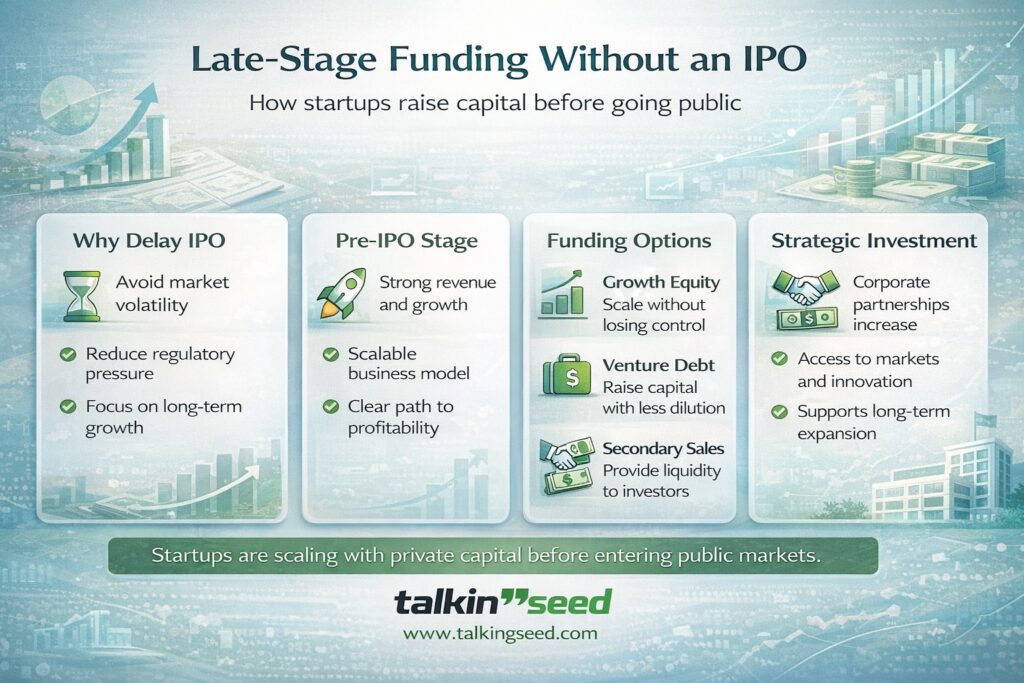
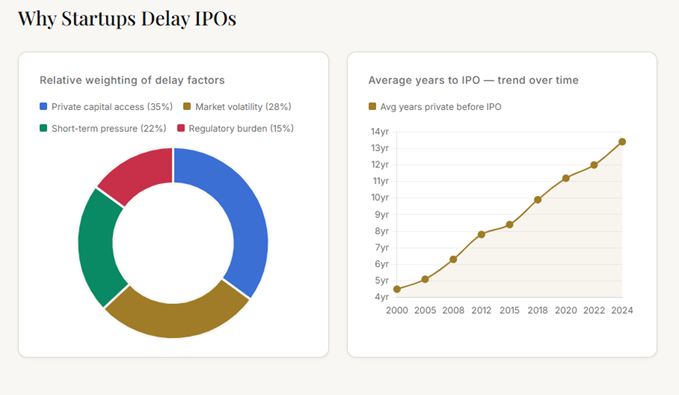
Why Startups Are Delaying IPOs
The decision to stay private longer is driven by both opportunity and caution. On one hand, private markets are now deep enough to support multi-billion-dollar companies. On the other, public markets come with significant pressure and complexity.
Key reasons include:
- Market volatility: IPO valuations can fluctuate significantly based on macroeconomic conditions.
- Regulatory burden: Public companies face strict compliance, reporting, and governance requirements.
- Short-term pressure: Quarterly earnings expectations can conflict with long-term innovation goals.
- Access to private capital: Abundant funding from private investors reduces the urgency to go public.
As a result, companies are redefining their growth journeys—raising large amounts of capital while maintaining operational independence.
What Defines Pre-IPO Funding
Pre-IPO funding refers to capital raised during the advanced growth stage of a company, typically just before a potential public listing. At this stage, startups are no longer experimenting—they are executing at scale.
Characteristics of pre-IPO companies:
- Strong and predictable revenue streams
- Established product-market fit
- Expanding customer base
- Operational scalability
- Clear path to profitability or dominance
The primary goal of funding at this stage is not survival, but acceleration. Capital is deployed to strengthen market leadership, expand globally, and optimize financial performance ahead of a potential liquidity event.
Deep Dive into Late-Stage Funding Options
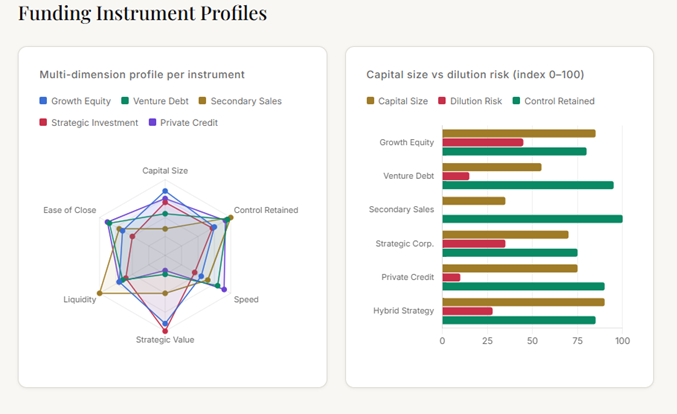
Growth Equity: Fueling Expansion Without Losing Control
Growth equity remains one of the most dominant funding options for late-stage startups. It involves raising capital from private equity firms or late-stage venture funds in exchange for minority ownership.
Unlike early-stage venture capital, growth equity investors prioritize stability and scalability over experimentation.
Key advantages:
- Limited dilution compared to earlier rounds
- Access to strategic expertise and governance
- No immediate exit pressure
- Alignment with long-term growth
Growth capital startups often use this funding for international expansion, acquisitions, and scaling infrastructure. Investors, in return, expect strong financial performance and eventual liquidity through IPO or acquisition.
Late-Stage Venture Debt: Smart Leverage for Scaling
Late-stage venture debt has become a critical tool for startups looking to raise capital without diluting ownership. This form of financing is particularly attractive for companies with predictable cash flows.
How it works:
- Structured as term loans or credit lines
- Includes fixed interest rates and repayment schedules
- May include warrants for minor equity participation
Strategic uses:
- Extending runway between equity rounds
- Funding capital expenditures (technology, infrastructure)
- Supporting working capital needs
- Bridging to profitability or IPO
The biggest advantage is capital efficiency—founders retain ownership while accessing significant funds. However, it requires disciplined financial management to avoid over-leverage.
Secondary Transactions: Unlocking Liquidity Without Dilution
One of the biggest challenges of staying private is limited liquidity. Secondary transactions solve this problem by allowing existing shareholders to sell their stakes to new investors.
Who benefits:
- Early investors seeking partial exits
- Employees looking for liquidity
- Founders diversifying personal wealth
Why it matters:
- No new shares are issued
- No dilution for the company
- Maintains cap table stability
Secondary markets are becoming increasingly structured, with dedicated platforms and funds facilitating these transactions. This trend is especially strong among unicorn startups.
Strategic Corporate Investments: Beyond Capital
Large corporations are increasingly investing in late-stage startups, not just for financial returns but for strategic advantages.
Common objectives:
- Access to innovation and emerging technologies
- Entry into new markets
- Strengthening competitive positioning
- Building long-term partnerships
These investments often come with added benefits such as distribution support, joint ventures, and operational synergies. However, alignment of interests is critical to avoid conflicts in the future.
Private Credit and Structured Financing
Private credit funds are reshaping how startups access debt capital. Unlike traditional bank loans, these funds offer tailored financing solutions.
Features include:
- Flexible repayment structures
- Customized deal terms
- Faster approval processes
- Larger ticket sizes
This form of funding is particularly useful for companies that need significant capital quickly without going through lengthy equity negotiations.
Hybrid Funding Strategies: The New Standard
Modern startups rarely rely on a single funding source. Instead, they adopt hybrid strategies that combine multiple instruments to optimize capital structure.
Examples:
- Equity + venture debt to balance dilution and leverage
- Primary + secondary funding to provide liquidity
- Strategic + financial investors for both capital and expertise
This approach allows startups to remain flexible, reduce risk, and maximize valuation.
Benefits of Raising Capital Without an IPO
Retaining Strategic Control
By staying private, founders and leadership teams retain greater decision-making authority. This enables:
- Long-term planning without external pressure
- Faster execution of strategic initiatives
- Greater flexibility in pivoting business models
Optimizing Valuation
Timing plays a critical role in IPO success. Delaying the IPO allows companies to:
- Improve revenue and profitability metrics
- Strengthen market positioning
- Achieve higher valuation multiples
Operational Focus
Without the burden of public reporting, startups can focus on:
- Innovation and product development
- Customer acquisition and retention
- Operational efficiency
This often leads to stronger fundamentals when the company eventually decides to go public.
Risks and Challenges to Consider
While late-stage funding offers numerous advantages, it is not without risks.
Debt Burden
Excessive reliance on venture debt or private credit can create financial strain. Companies must ensure:
- Strong cash flow management
- Clear repayment strategies
- Conservative leverage ratios
High Investor Expectations
Late-stage investors demand performance. This includes:
- Rapid revenue growth
- Clear profitability timelines
- Strong governance practices
Failure to meet expectations can impact future funding or exit opportunities.
Limited Exit Options
Without an IPO, liquidity remains constrained. While secondary markets help, they may not fully replace the benefits of public listing.
Building a Strong Pre-IPO Financial Strategy
A well-structured financial strategy is essential for navigating late-stage funding successfully.
Key components:
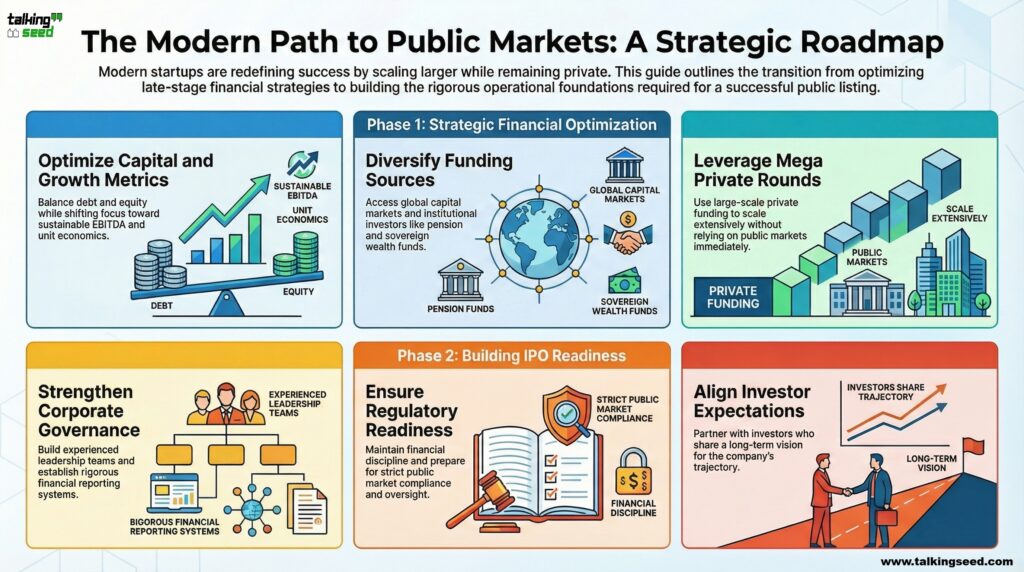
- Capital structure optimization: Balancing debt and equity
- Cash flow forecasting: Ensuring liquidity and stability
- Risk management: Preparing for market fluctuations
- Investor alignment: Choosing partners with a shared vision
Companies that excel in these areas are better positioned to attract high-quality investors and secure favorable terms.
Emerging Trends in Pre-IPO Funding
Mega Private Rounds
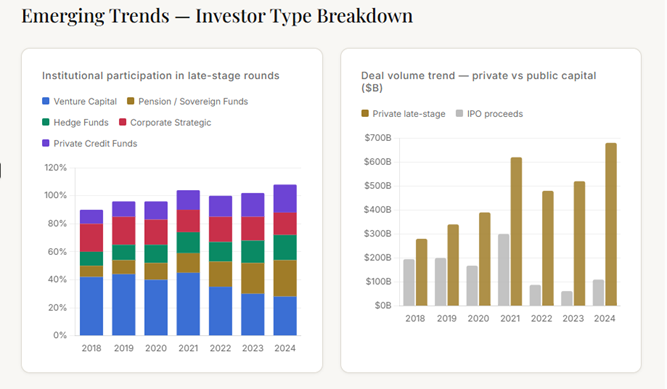
Startups are raising increasingly large rounds, often exceeding hundreds of millions of dollars. This allows them to scale without relying on public markets.
Institutional Investor Participation
Pension funds, sovereign wealth funds, and hedge funds are actively investing in late-stage startups, bringing deeper pools of capital.
Focus on Sustainable Growth
Investors are shifting from growth-at-all-costs to sustainable and profitable growth. Metrics such as unit economics and EBITDA are gaining importance.
Global Capital Access
Startups are no longer limited to local investors. Cross-border funding is becoming common, enabling access to global capital markets.
Preparing for the Future IPO (Even If Delayed)
Even when delaying an IPO, preparation should never stop. Companies must build the foundation required for a successful public listing.
Preparation includes:
- Strengthening corporate governance
- Enhancing financial reporting systems
- Building experienced leadership teams
- Ensuring regulatory readiness
This ensures that when market conditions become favorable, the company can move quickly and confidently.
Strategic Insights for Founders and Leaders
To succeed in the modern funding environment, founders must adopt a strategic mindset toward capital.
- Treat funding as a growth enabler, not just a necessity
- Diversify funding sources to reduce risk
- Maintain financial discipline at all stages
- Align investor expectations with long-term goals
The ability to navigate late-stage funding effectively can significantly influence a company’s trajectory and valuation.
A New Era of Startup Growth
The startup ecosystem has entered a new phase where IPOs are no longer the only path to scale. With access to diverse pre-IPO funding options, companies can grow larger, stronger, and more resilient while remaining private.
Late-stage venture debt, growth capital for startups, and structured financing solutions are redefining how businesses raise capital. Startups that leverage these strategies effectively are not just delaying IPOs—they are redefining what success looks like in the modern economy.
In this competitive landscape, the winners will be those who combine financial intelligence with strategic vision, using capital not just to grow—but to lead.