
Series A, Series B, and Series C Funding Criteria Every Startup Must Know
Raising venture capital in 2026 feels very different from just a few years ago. Founders who once secured funding with an ambitious idea and a sleek pitch deck are now facing a tougher, more analytical investor mindset. Capital is still available, but it flows toward startups that show discipline, predictable growth, and measurable business fundamentals.
Today, investors are no longer impressed by vanity metrics or aggressive spending. They want clarity. They want proof. Most importantly, they want companies that can survive without constant fundraising.
This shift has changed what investors look for in Series A–C rounds. Each stage now demands stronger performance, cleaner numbers, and greater operational maturity. If you understand these expectations early, you can design your growth strategy around them and dramatically increase your chances of closing a round faster and at a better valuation.
Let’s walk through how funding criteria evolve from Series A to Series C and which startup metrics investors want to see in 2026.
The Funding Landscape Has Matured
The venture ecosystem has become more cautious after years of inflated valuations and startups burning cash without a path to profitability. Investors have learned that growth without fundamentals is fragile. As a result, they now prioritize sustainability over speed.
In practical terms, this means every rupee or dollar you spend must produce a return. Startups are evaluated on how efficiently they grow, not just how quickly.
Instead of asking, “How big can this get?”, investors now ask:
“Is this business already working, and can it scale predictably?”
If your numbers answer that confidently, fundraising becomes easier. If not, even the best story won’t save the pitch.
What Investors Look for in Series A Funding
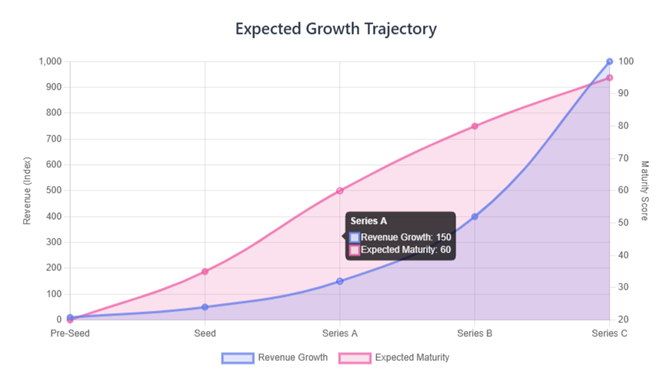
Series A funding is the first major institutional checkpoint. At this stage, investors are not taking risks on raw ideas anymore. They expect evidence that your product has real demand and that your startup has moved beyond experimentation.
The most important factor is product–market fit. Investors want to see customers actively using your solution, returning frequently, and recommending it to others. Strong engagement tells them you are solving a real problem, not chasing temporary hype.
Revenue traction also becomes essential. You don’t need massive profits yet, but you do need consistent growth. Predictability builds trust. If revenue climbs steadily every month, investors feel confident that scaling is possible.
This is also the stage where unit economics come under the microscope. Founders must show that acquiring customers makes financial sense. If it costs more to acquire a customer than the value they generate, scaling only magnifies losses.
At Series A, investors typically expect to see:
- Early but consistent revenue or ARR growth
- Clear product–market fit with low churn
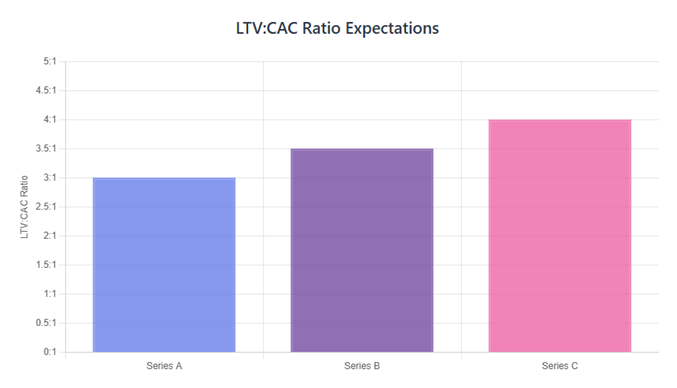
- Healthy LTV to CAC ratio (ideally 3:1 or higher)
- A repeatable customer acquisition strategy
- A strong, complementary founding team
The team still plays a huge role here. Investors know the company will pivot and evolve, so they back founders who can learn fast and execute relentlessly.
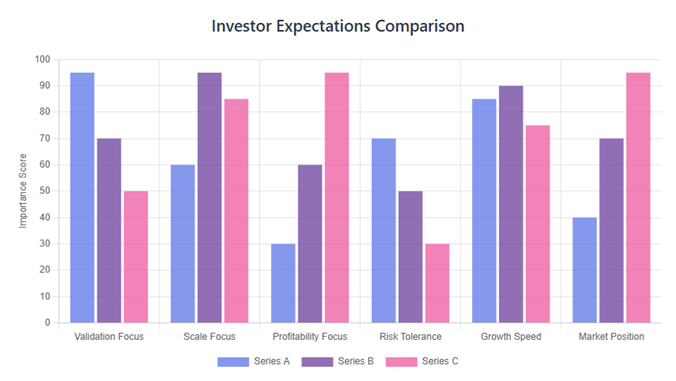
In short, Series A investors fund validation. They want proof that your startup works in the real world.
What Investors Want in Series B Funding
Once you reach Series B, the conversation changes. Product–market fit is assumed. Now the focus shifts to scale.
Series B funding criteria revolve around one question: can this company grow aggressively without breaking?
Investors expect to see a business that has figured out its core engine. Sales processes should be defined. Marketing channels should be predictable. Revenue should no longer feel random or experimental.
At this stage, growth becomes systematic rather than opportunistic.
Startups should demonstrate:
- Strong year-over-year revenue growth
- Repeatable sales or marketing funnels
- Improving gross margins
- High customer retention and expansion revenue
- Clear use of funds for scaling teams or entering new markets
Retention becomes especially important. Losing customers quickly makes growth expensive and unstable. Investors love businesses where customers stay longer and spend more over time because this compounds revenue naturally.
Operational maturity also matters. Series B startups are expected to look more like structured companies than scrappy early teams. Clean reporting, defined roles, and experienced leadership inspire confidence.
Think of Series B as fuel for acceleration. Investors are pouring money into a machine that already runs smoothly. If the engine isn’t reliable, they won’t step on the gas.
What Investors Expect in Series C Funding
By the time a startup reaches Series C, it is no longer just a startup. It’s becoming an industry leader.
Series C funding is less about proving the model and more about dominating the market. Investors at this stage treat the company almost like a pre-IPO business. Financial discipline, stability, and defensibility become critical.
Revenue numbers are typically large, and growth is supported by solid margins. Investors want to see that the business can eventually generate significant profits, not just top-line expansion.
There is also a bigger focus on competitive advantages. Companies must show why they cannot easily be replaced or copied. This could come from brand power, technology, network effects, or long-term contracts.
Common expectations at Series C include:
- Large and predictable revenue base
- Path to profitability or positive cash flow
- Strong gross margins
- Market leadership or clear competitive moat
- Scalable systems and senior management depth
Expansion strategies often include international growth, acquisitions, or IPO preparation. Investors want confidence that leadership can manage complexity at scale.
At this point, risk is lower, but expectations are higher. Investors are backing future category leaders, not experiments.
Startup Metrics Investors Want Across All Rounds
While funding criteria evolve, some metrics matter at every stage. These numbers form the foundation of investor decision-making.
No matter your round, you should track and optimize:
- Revenue growth rate
- Customer acquisition cost (CAC)
- Lifetime value (LTV)
- Gross margin
- Burn rate and runway
- Customer retention or churn
These metrics tell the real story of your business’s health. A beautiful pitch deck cannot compensate for weak fundamentals.
Investors trust numbers more than narratives.
How Founders Can Prepare for Fundraising in 2026
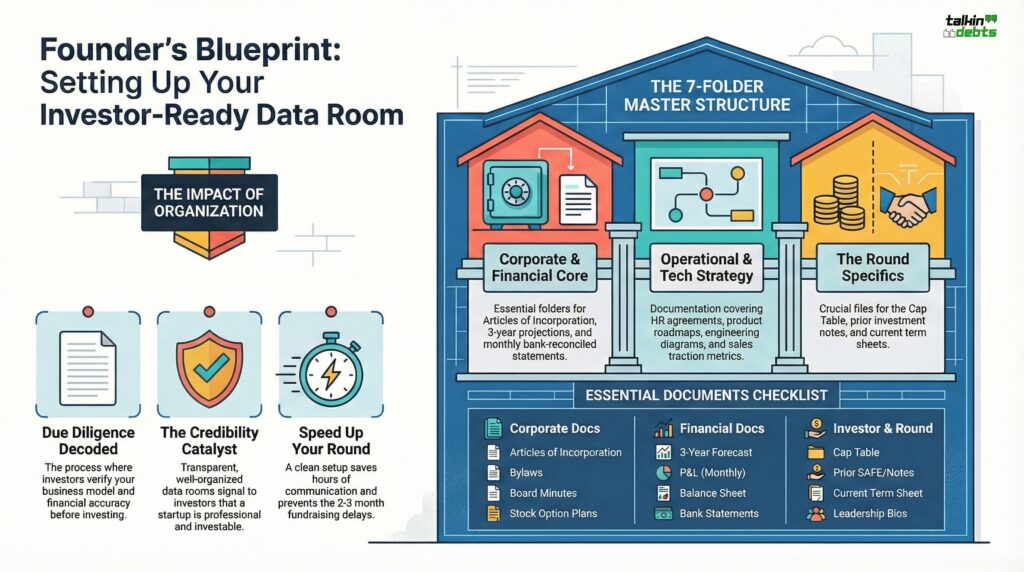
Many founders spend months perfecting slides while ignoring the core business. In reality, the strongest fundraising strategy is simply building a stronger company.
If retention improves, revenue becomes predictable.
If CAC decreases, growth becomes efficient.
If margins increase, profitability becomes realistic.
When these pieces fall into place, fundraising conversations feel natural rather than stressful.
Focus on building systems, not shortcuts. Track your metrics obsessively. Be transparent about weaknesses and proactive about fixing them. Investors appreciate honesty and preparation far more than exaggerated projections.
By aligning your operations with what investors look for in Series A–C rounds, you position your startup as an opportunity instead of a gamble.
And in 2026’s competitive venture landscape, that difference is exactly what gets deals closed.