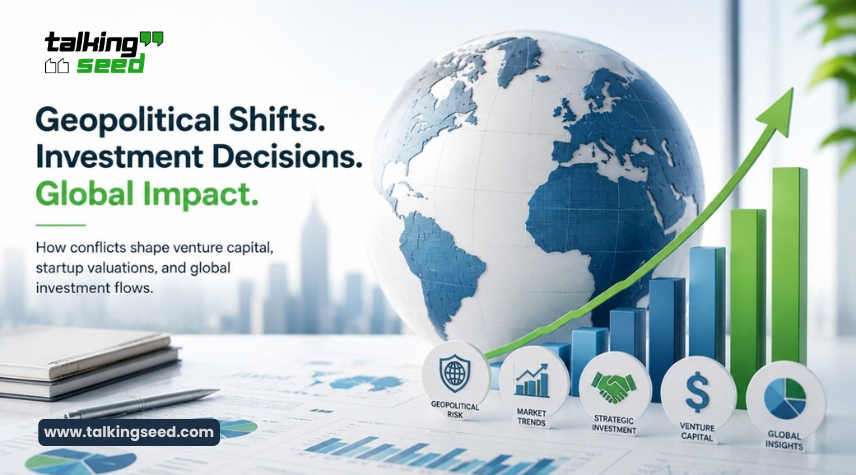
The global startup ecosystem does not operate in isolation. Venture capital markets, startup valuations, fundraising activity, mergers and acquisitions, and investor sentiment are deeply connected to geopolitical stability. When wars erupt, sanctions are imposed, trade routes are disrupted, or energy prices surge, the effects quickly ripple across financial markets and startup ecosystems worldwide.
In recent years, geopolitical conflicts have become one of the most significant factors influencing startup funding during economic uncertainty. From regional wars and international sanctions to growing tensions between major economic powers, founders and investors must navigate an increasingly complex environment.
Understanding the impact of war on venture capital and global investment trends in 2026 is essential for startups seeking capital, investors managing risk, and policymakers aiming to foster innovation-driven economic growth.
Why Geopolitical Events Matter to Venture Capital
Venture capital thrives in environments characterized by stability, predictable growth, and investor confidence. Geopolitical conflicts introduce uncertainty that directly affects investment decisions.
When uncertainty rises, investors often move capital toward safer assets such as government bonds, gold, or established public companies. Venture capital, by its nature, is a high-risk asset class. As a result, startup funding often experiences slowdowns during periods of geopolitical instability.
Conflicts can create concerns about:
- Economic growth
- Inflation
- Supply chain disruptions
- Energy security
- Currency volatility
- Regulatory changes
- Cross-border investment restrictions
These concerns influence how investors allocate capital and assess startup opportunities.
The Impact of War on Venture Capital Funding
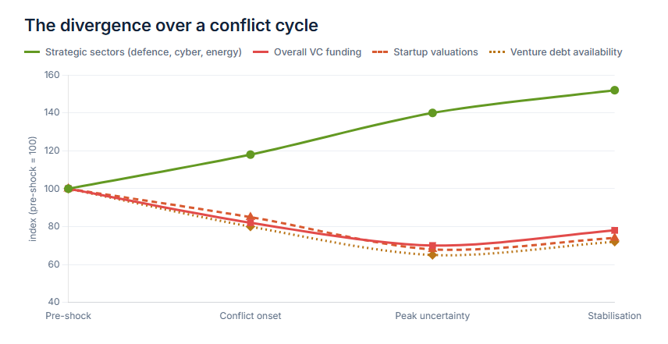
One of the most visible consequences of geopolitical conflict is a decline in venture capital activity.
During periods of conflict, venture capital firms often become more cautious. Rather than aggressively funding early-stage startups, investors focus on supporting existing portfolio companies and preserving capital.
Several factors contribute to reduced venture funding:
Increased Market Uncertainty
Investors prefer predictable market conditions. Wars and political conflicts create uncertainty around economic forecasts, making it difficult to evaluate startup growth potential.
As uncertainty rises, investment committees often delay decisions, resulting in longer fundraising cycles for startups.
Reduced Risk Appetite
The impact of war on venture capital is often reflected in declining investor risk tolerance.
Investors may avoid:
- Pre-revenue startups
- Experimental technologies
- New markets
- International expansion opportunities
Instead, capital tends to flow toward businesses with proven revenue models and stronger financial fundamentals.
Higher Interest Rates
Geopolitical conflicts frequently contribute to inflation through energy and commodity price shocks.
To combat inflation, central banks may increase interest rates. Higher rates reduce liquidity across financial markets and make venture capital more expensive.
As a result, startup funding during economic uncertainty often becomes more selective.
How Startup Valuations Change During Geopolitical Crises
Startup valuations are highly sensitive to investor sentiment and market conditions.
During periods of geopolitical instability, valuations typically experience downward pressure.
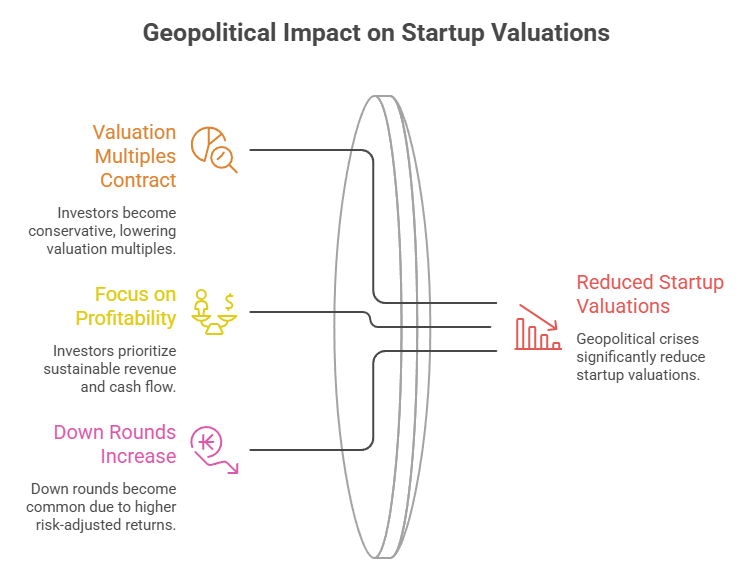
Valuation Multiples Contract
Investors become more conservative when assessing future growth projections.
Companies that once received premium valuations based on aggressive growth assumptions may face lower valuation multiples as investors adjust expectations.
This phenomenon is especially common in:
- Technology startups
- Artificial intelligence companies
- Fintech businesses
- Consumer technology platforms
Greater Focus on Profitability
During periods of economic optimism, investors often prioritize growth over profitability.
However, geopolitical crises shift investor priorities toward:
- Sustainable revenue
- Cash flow generation
- Operational efficiency
- Capital preservation
Startups that demonstrate financial discipline often maintain stronger valuations compared to those dependent on continuous fundraising.
Down Rounds Become More Common
A down round occurs when a startup raises capital at a lower valuation than its previous funding round.
Periods of geopolitical instability often increase the likelihood of down rounds because investors demand higher risk-adjusted returns.
Startup Funding During Economic Uncertainty
Fundraising becomes significantly more challenging during times of global conflict and economic uncertainty.
Founders must adapt their strategies to meet changing investor expectations.
Longer Fundraising Timelines
Investment decisions typically take longer during uncertain periods.
Investors conduct more extensive due diligence and carefully evaluate potential risks before committing capital.
Startups should prepare for fundraising processes that may take several months longer than expected.
Stronger Emphasis on Unit Economics
Investors increasingly focus on key financial metrics such as:
- Customer acquisition cost
- Lifetime customer value
- Gross margins
- Burn rate
- Cash runway
Companies with efficient business models are generally more attractive during uncertain economic conditions.
Importance of Cash Management
Cash preservation becomes a strategic priority.
Startups often extend runways through:
- Reduced hiring
- Controlled spending
- Operational efficiency improvements
- Revenue diversification
Investors reward companies that demonstrate resilience and prudent financial management.
Venture Debt Availability During Geopolitical Tensions
Venture debt has become an important funding source for startups seeking non-dilutive capital.
However, geopolitical conflicts can significantly affect venture debt markets.
Lenders become more selective when economic uncertainty increases.
Consequently:
- Loan approval standards tighten
- Interest rates rise
- Debt covenants become stricter
- Borrowing capacity decreases
Startups with strong balance sheets and recurring revenue streams generally have better access to venture debt during volatile periods.
For many founders, venture debt remains a valuable financing option, but obtaining favorable terms becomes more difficult when geopolitical risks escalate.
Effects on Global Investment Flows
Global investment flows are particularly sensitive to geopolitical developments.
Investors continuously evaluate risk-adjusted returns across different regions.
When conflicts emerge, capital often shifts away from perceived high-risk markets toward more stable jurisdictions.
Flight to Stability
Institutional investors frequently redirect funds toward countries with:
- Strong legal systems
- Political stability
- Economic resilience
- Transparent regulations
This shift influences startup ecosystems worldwide.
Regions viewed as safe investment destinations may experience increased venture capital inflows, while others see capital outflows.
Regional Investment Realignment
Geopolitical tensions often accelerate regional investment strategies.
Investors increasingly favor:
- Nearshoring
- Friend-shoring
- Domestic manufacturing
- Regional supply chains
These trends create new opportunities for startups operating in strategic industries.
Currency Risk and Capital Allocation
Currency volatility can significantly influence global investment decisions.
Investors may hesitate to deploy capital in regions where exchange rate fluctuations could reduce returns.
As a result, geopolitical instability can reshape international capital flows and startup funding patterns.
How Sanctions Affect Startup Ecosystems
Economic sanctions are another powerful factor influencing startup ecosystems.
Sanctions can restrict:
- Cross-border payments
- Technology transfers
- Investment activity
- Banking relationships
Startups operating in sanctioned regions often face challenges accessing global capital markets.
Investors may avoid exposure to regulatory risks associated with sanctioned countries, reducing funding opportunities for affected startups.
At the same time, sanctions can create opportunities for domestic innovation as local companies develop alternatives to restricted products and services.
Mergers and Acquisitions During Geopolitical Uncertainty
M&A activity often slows during periods of geopolitical conflict.
Acquirers become more cautious due to:
- Market volatility
- Valuation uncertainty
- Regulatory scrutiny
- Financing constraints
Strategic buyers may postpone acquisitions until economic conditions stabilize.
However, periods of uncertainty can also create attractive acquisition opportunities.
Companies with strong balance sheets may acquire distressed startups at lower valuations, leading to consolidation across industries.
This dynamic can reshape competitive landscapes and create long-term growth opportunities for larger players.
Exit Opportunities for Startups
Successful exits are critical to venture capital returns.
Geopolitical instability can significantly impact exit opportunities.
Initial Public Offerings Slow Down
Public markets generally become less receptive to high-growth companies during uncertain periods.
Investors demand greater certainty regarding future performance, making IPO markets more selective.
As a result, many startups delay public offerings until market conditions improve.
Private Market Exits Increase
When IPO markets slow, private acquisitions often become more attractive exit paths.
Strategic acquisitions, secondary transactions, and private equity investments may become increasingly important exit channels.
Longer Holding Periods
Venture capital firms may extend investment horizons during periods of geopolitical uncertainty.
Longer holding periods allow startups to navigate market volatility and potentially achieve stronger valuations once conditions improve.
Industries That Benefit During Geopolitical Conflicts
While many sectors face challenges, certain industries often attract increased investment during geopolitical crises.
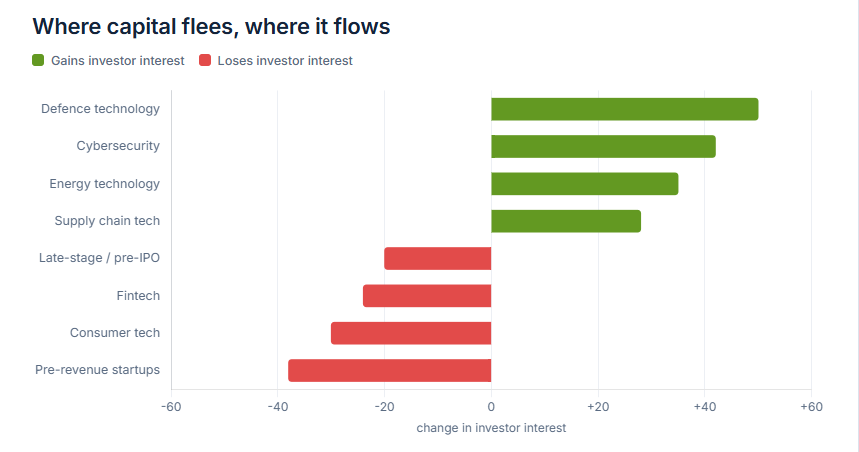
Defense Technology
Defense technology startups frequently experience heightened investor interest as governments increase military spending.
Cybersecurity
Geopolitical tensions often lead to increased cyber threats, driving demand for cybersecurity solutions.
Energy Technology
Energy security concerns create opportunities for startups focused on:
- Renewable energy
- Energy storage
- Grid modernization
- Alternative fuels
Supply Chain Technology
Companies offering supply chain visibility, logistics optimization, and manufacturing resilience solutions often benefit from changing global trade patterns.
Global Investment Trends 2026: What Founders and Investors Should Watch
Several emerging trends are shaping global investment flows in 2026.
Increased Focus on Resilience
Investors increasingly prioritize companies capable of operating effectively during uncertain economic conditions.
Strategic Technology Investments
Governments and private investors are directing capital toward strategic sectors including:
- Artificial intelligence
- Semiconductor manufacturing
- Cybersecurity
- Energy infrastructure
Regional Venture Capital Growth
Emerging startup hubs continue attracting investment as companies diversify geographic exposure and seek new growth opportunities.
Stronger Due Diligence Standards
Investors are placing greater emphasis on geopolitical risk assessments during investment evaluations.
Startups that proactively address these risks may gain a competitive advantage when fundraising.
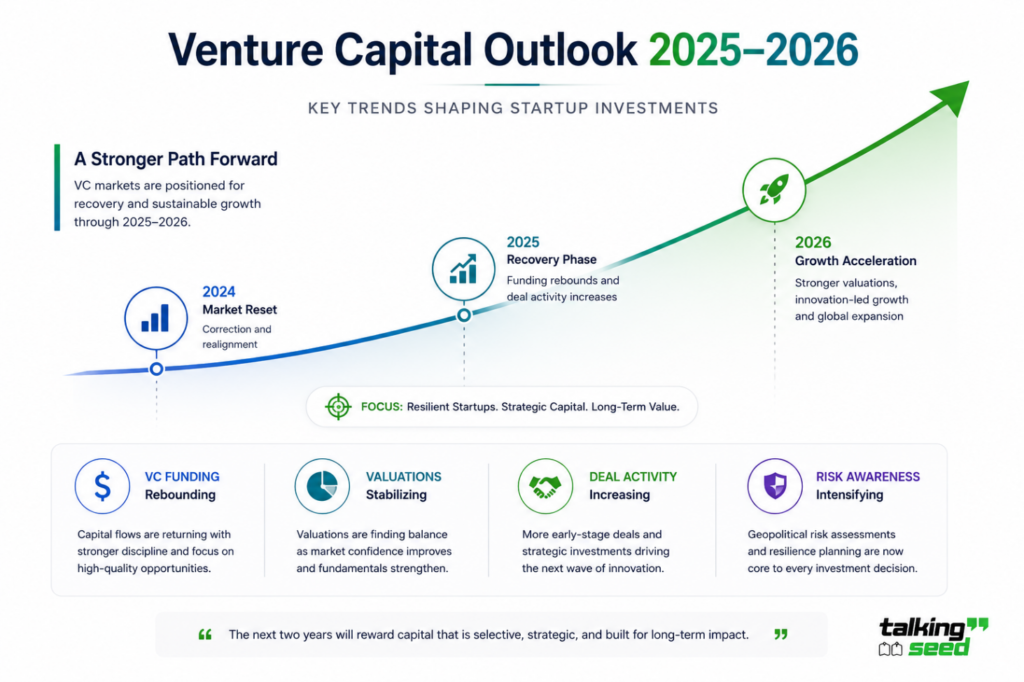
Navigating the Future of Startup Investment in an Uncertain World
The impact of war on venture capital extends far beyond financial markets. Geopolitical conflicts influence startup funding during economic uncertainty, reshape startup valuations, alter venture debt availability, affect M&A activity, and redirect global investment flows.
While geopolitical instability creates challenges, it also generates new opportunities for resilient founders and forward-thinking investors. Companies that focus on financial discipline, operational efficiency, risk management, and strategic positioning are better equipped to navigate uncertain environments.
As global investment trends in 2026 continue to evolve, understanding the relationship between geopolitical events and venture capital will remain essential for startups seeking growth and investors pursuing long-term returns. By adapting to changing conditions and maintaining a long-term perspective, both founders and investors can successfully navigate the complexities of an increasingly interconnected world.