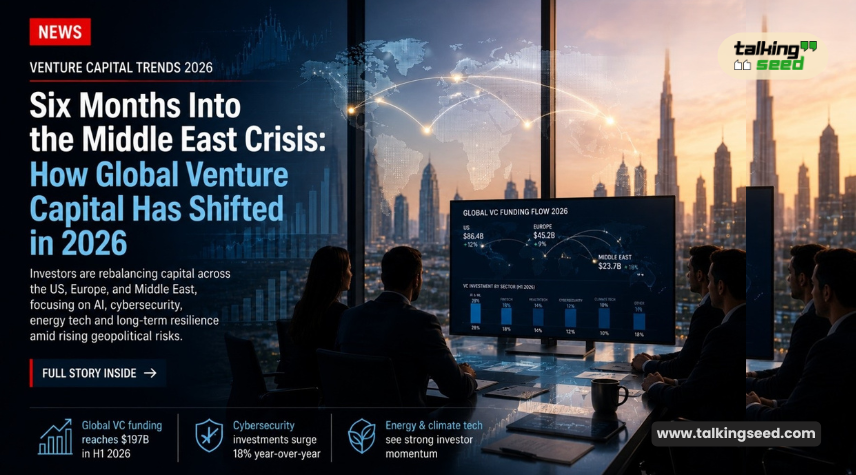
June, 2026 — Six months after escalating tensions in the Middle East began reshaping global financial markets, venture capital investors are significantly reallocating investment across industries and regions. While startup funding has not slowed dramatically, investment priorities have shifted as geopolitical uncertainty, elevated energy prices, and tighter financial conditions influence where venture firms deploy capital.
Industry analysts say the conflict has accelerated changes that were already emerging following higher interest rates and a more cautious investment environment. Rather than pursuing aggressive expansion across every technology sector, investors are concentrating funding on businesses considered strategically important in an increasingly uncertain global economy.
The shift is evident across North America, Europe, and the Middle East, where venture firms are placing greater emphasis on artificial intelligence, cybersecurity, energy technology, and digital infrastructure while becoming more selective toward sectors viewed as vulnerable to geopolitical disruption.
Investors Reposition Capital Toward Lower-Risk Sectors
Venture capital firms have spent much of the first half of 2026 repositioning portfolios to reduce geopolitical exposure. Investment committees are increasingly evaluating political stability, supply chain resilience, regulatory environments, and regional security alongside traditional financial metrics before approving new funding rounds.
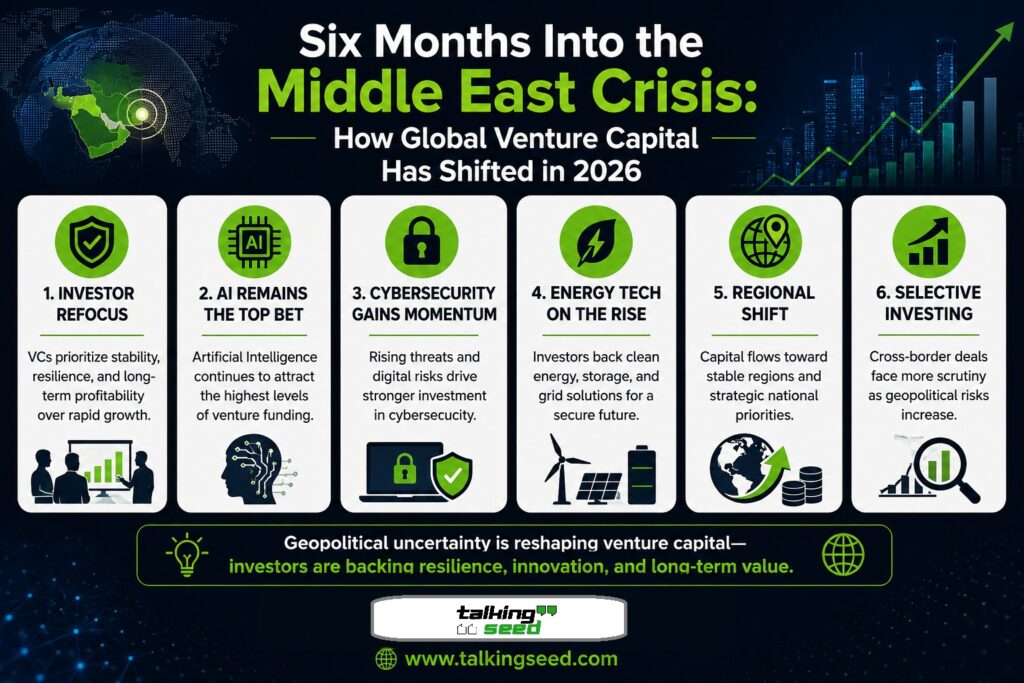
Market participants say this represents one of the most significant changes in global VC funding over the past several years, reflecting a broader shift from rapid-growth investing toward long-term resilience.
Companies demonstrating sustainable revenue models and clear paths to profitability are attracting stronger investor interest than businesses relying solely on future growth projections.
Artificial Intelligence Continues to Lead Funding Activity
Artificial intelligence remains the largest recipient of venture capital despite broader market uncertainty.
Investors continue backing companies developing enterprise AI, automation software, healthcare technologies, financial services platforms, and industrial applications, viewing these businesses as capable of delivering productivity improvements regardless of economic conditions.
Several investment firms report that AI funding has remained resilient because corporate demand for automation and operational efficiency continues to grow even as businesses reduce spending elsewhere.
The sector has become one of the few areas where competition among investors remains intense.
Cybersecurity and Energy Technology Gain Momentum
The geopolitical environment has also accelerated venture funding for cybersecurity companies.
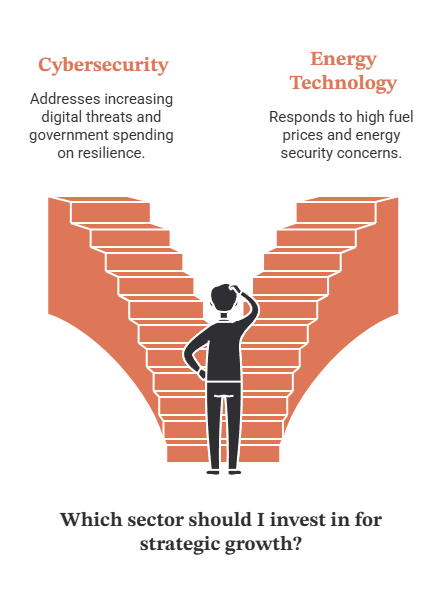
Startups focused on cloud protection, digital identity, infrastructure security, and threat intelligence have experienced stronger investment activity as governments and businesses increase spending on digital resilience.
At the same time, energy technology has emerged as another major beneficiary.
Higher fuel prices and concerns surrounding energy security have encouraged investors to support companies developing battery storage, renewable energy systems, grid modernization, and industrial energy efficiency solutions.
Industry observers say both sectors are increasingly viewed as strategic investments rather than simply high-growth opportunities.
Regional Funding Patterns Continue to Evolve
Regional investment trends have also changed during the past six months.
The United States continues to dominate venture capital activity, particularly in artificial intelligence, enterprise software, biotechnology, and defense technology.
European investors have directed larger amounts of capital toward clean energy, industrial innovation, and advanced manufacturing as governments prioritize energy independence and resilient supply chains.
Across the Middle East, sovereign-backed investment funds have maintained support for long-term diversification strategies, continuing to finance technology, fintech, logistics, and digital infrastructure projects despite ongoing regional uncertainty.
Cross-border investment, however, has become noticeably more selective as firms assess geopolitical exposure before expanding internationally.
Startup Valuations Reflect Greater Investor Discipline
The more cautious investment environment is also influencing startup valuations.
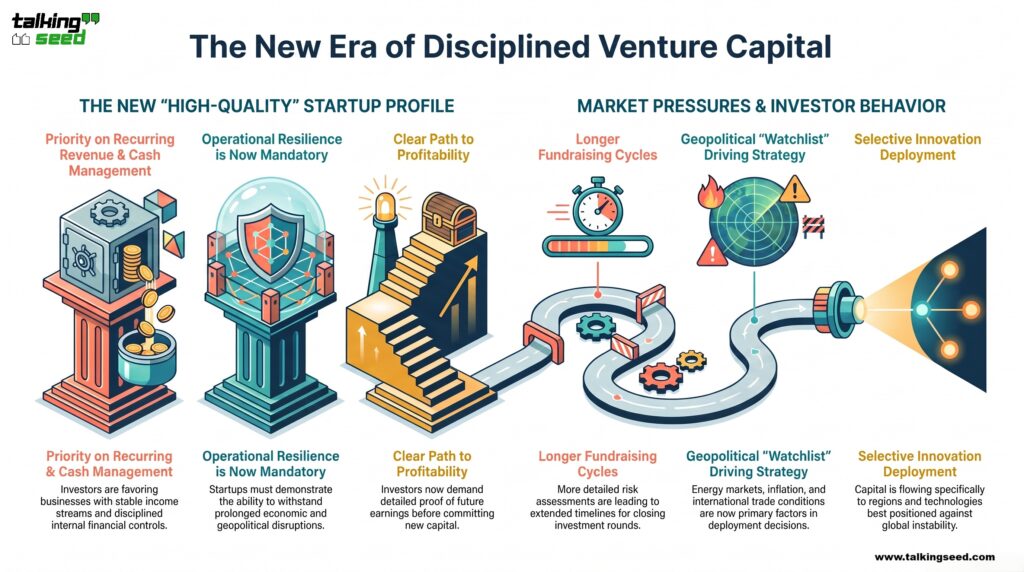
Companies with recurring revenue, strong financial performance, and disciplined cash management continue attracting investor interest, while businesses dependent on aggressive expansion are facing longer fundraising cycles and greater scrutiny.
Several venture firms report that funding remains available for high-quality companies, but investment decisions now involve more detailed risk assessments than earlier market cycles.
This more disciplined approach is contributing to healthier funding conditions, even as total capital deployment becomes increasingly selective.
Markets Continue Watching Geopolitical Developments
Venture capital firms are expected to remain highly responsive to geopolitical developments throughout the remainder of the year as investors monitor energy markets, inflation, monetary policy, and international trade conditions.
Although startup funding has remained resilient during the first six months of the Middle East crisis, investment strategies continue evolving as firms balance growth opportunities against rising geopolitical risks.
For entrepreneurs seeking funding, access to capital remains available, but investors are demanding stronger business fundamentals, greater operational resilience, and clearer paths to profitability before committing new capital.
Six months into the crisis, venture capital trends for 2026 show that global investors have not withdrawn from innovation—they have simply become more selective about where capital is deployed. As geopolitical uncertainty continues to influence financial markets, global VC funding is increasingly flowing toward technologies and regions viewed as better positioned to withstand prolonged economic and geopolitical disruption.