The U.S. Federal Reserve kept its benchmark interest rate unchanged on Wednesday, extending a policy pause that is being closely watched by venture capital firms, startup founders, and technology investors. While the decision was largely expected by financial markets, it reinforces a fundraising environment that remains significantly different from the low-interest-rate era that fueled record startup valuations and venture capital investment.
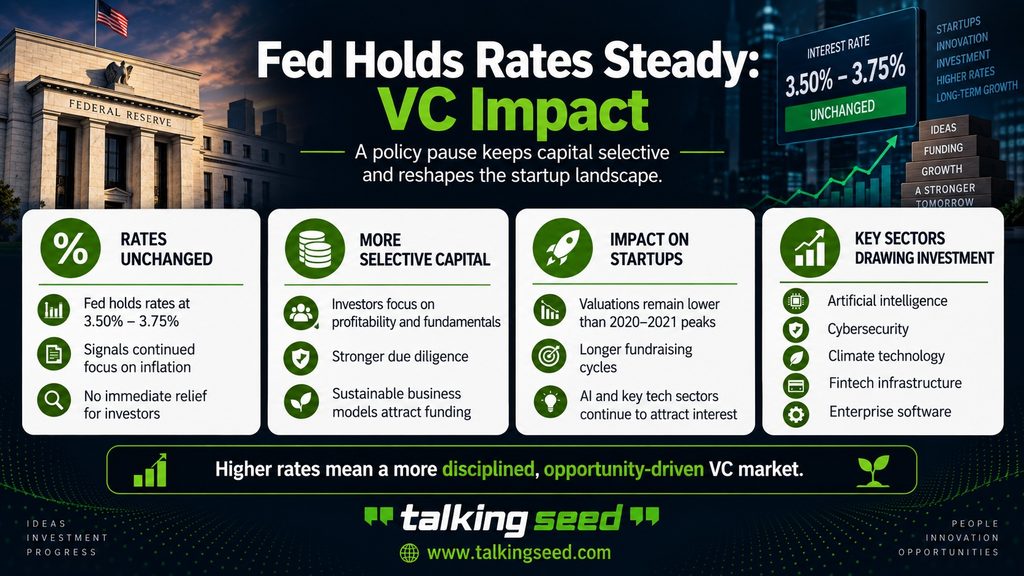
The Federal Open Market Committee (FOMC) voted to maintain its current interest rate range as policymakers continue balancing inflation concerns with economic growth. Although inflation has moderated from previous highs, Federal Reserve officials indicated that price stability remains a priority, reducing expectations of aggressive rate cuts in the near term.
For the startup ecosystem, the decision signals that capital will likely remain more selective and expensive than it was during the peak funding years of 2020 and 2021.
Higher Rates Continue to Reshape Venture Capital
Investors across venture capital markets have spent much of the past two years adjusting to a higher-rate environment. As interest rates increased, the cost of capital rose, prompting investors to become more cautious when evaluating startup opportunities.
Companies that previously prioritized rapid growth at all costs have increasingly been expected to demonstrate stronger financial discipline, clearer revenue models, and a path toward profitability.
Investors Place Greater Emphasis on Fundamentals
The Federal Reserve’s latest decision does little to change that dynamic.
“Founders are operating in a market where investors continue to focus on fundamentals,” said a venture capital advisor following the Fed announcement. “The availability of capital hasn’t disappeared, but investors are conducting deeper due diligence and placing greater emphasis on sustainable business models.”
Sustainable Business Models Gain Importance
Investors are increasingly evaluating companies based on financial discipline, sustainable growth, revenue visibility, and the ability to create long-term value rather than relying solely on rapid expansion.
Impact on Startup Valuations
The impact is particularly evident in startup valuations.
Higher interest rates generally reduce the present value of future earnings, a factor that can significantly affect the valuation of growth-stage technology companies. As a result, many startups have experienced valuation resets compared with the peak levels seen during the venture capital boom.
AI Startups Continue to Attract Investor Interest
While artificial intelligence companies continue attracting substantial investor interest, startups in other sectors are facing increased scrutiny regarding revenue growth, customer acquisition costs, and cash runway.
Venture Capital Funding Becomes More Selective
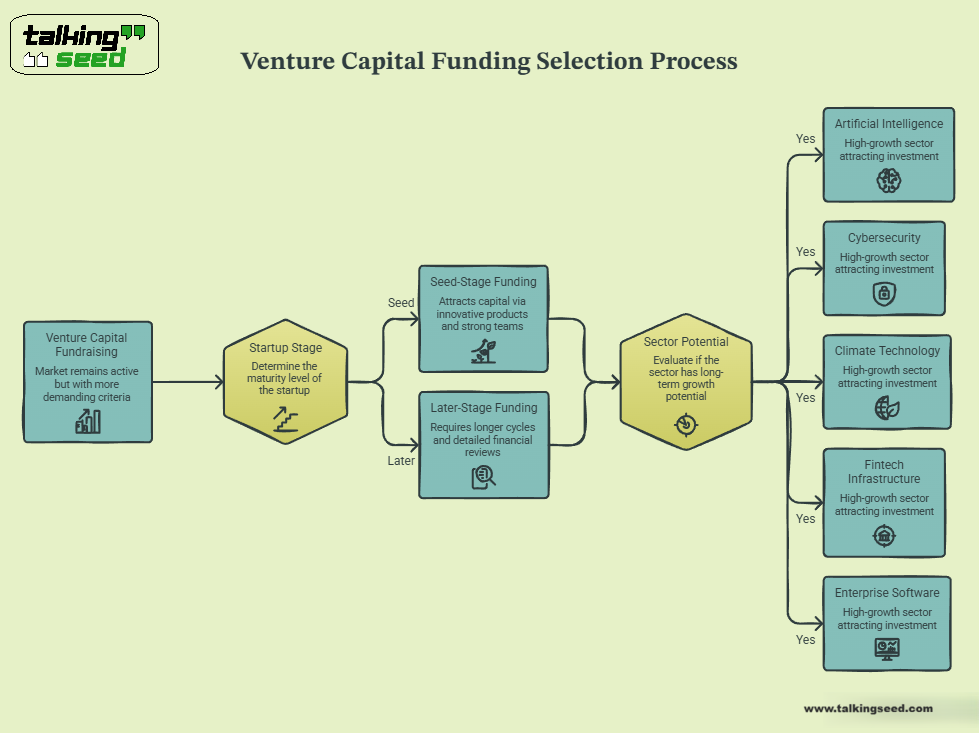
Venture capital firms say the fundraising market remains active, but the criteria for securing investment have become more demanding.
Early-Stage Startups Still Attract Capital
Seed-stage companies with innovative products and strong founding teams continue to attract investor attention. However, later-stage startups seeking large funding rounds are often encountering longer fundraising cycles and more detailed financial reviews.
Capital Concentrates in High-Growth Sectors
Several investors note that capital deployment has become increasingly concentrated in sectors viewed as having long-term growth potential, including artificial intelligence, cybersecurity, climate technology, fintech infrastructure, and enterprise software.
Sectors Drawing Investor Attention
Key areas attracting continued venture capital interest include:
- Artificial intelligence
- Cybersecurity
- Climate technology
- Fintech infrastructure
- Enterprise software
How Higher Rates Are Changing Venture Capital Allocation
The Federal Reserve’s decision is also influencing how venture firms allocate capital across their portfolios.
During periods of low interest rates, investors often pursue higher-risk assets in search of greater returns. When rates remain elevated, investors have access to alternative opportunities that offer attractive returns with lower risk, making venture investments comparatively less appealing for some institutional capital providers.
Venture Firms Focus on Quality Over Quantity
This shift has encouraged many venture capital firms to focus on quality over quantity, supporting fewer companies while reserving more capital for follow-on investments in their strongest portfolio businesses.
Follow-On Funding Becomes More Strategic
Venture firms are increasingly prioritizing portfolio companies that demonstrate strong performance and have a clearer ability to achieve sustainable growth.
Startup Founders Adjust Fundraising Strategies
Startup founders are responding by adjusting their fundraising strategies.
Rather than pursuing growth at any cost, many entrepreneurs are prioritizing operational efficiency, cash flow management, and profitability milestones. Investors say companies demonstrating disciplined spending and strong unit economics are receiving more favorable attention in the current market.
Operational Discipline Becomes a Fundraising Advantage
Founders are increasingly expected to demonstrate:
- Efficient use of capital
- Strong unit economics
- Sustainable revenue growth
- Effective cash-flow management
- Clear profitability milestones
- A credible path to long-term value creation
Future Interest Rate Cuts Could Improve Funding Conditions
The latest Federal Reserve decision is also being closely monitored by startup accelerators, angel investors, and corporate venture capital programs.
Many industry participants believe that future interest rate reductions could improve fundraising conditions by increasing investor appetite for growth-oriented assets. However, policymakers have indicated that future decisions will depend on incoming economic data, particularly inflation and employment trends.
Interest Rate Uncertainty Remains
Until clearer signals emerge regarding future rate cuts, uncertainty is expected to remain a defining feature of the startup funding environment.
Venture Capital Activity Shows Resilience in 2026
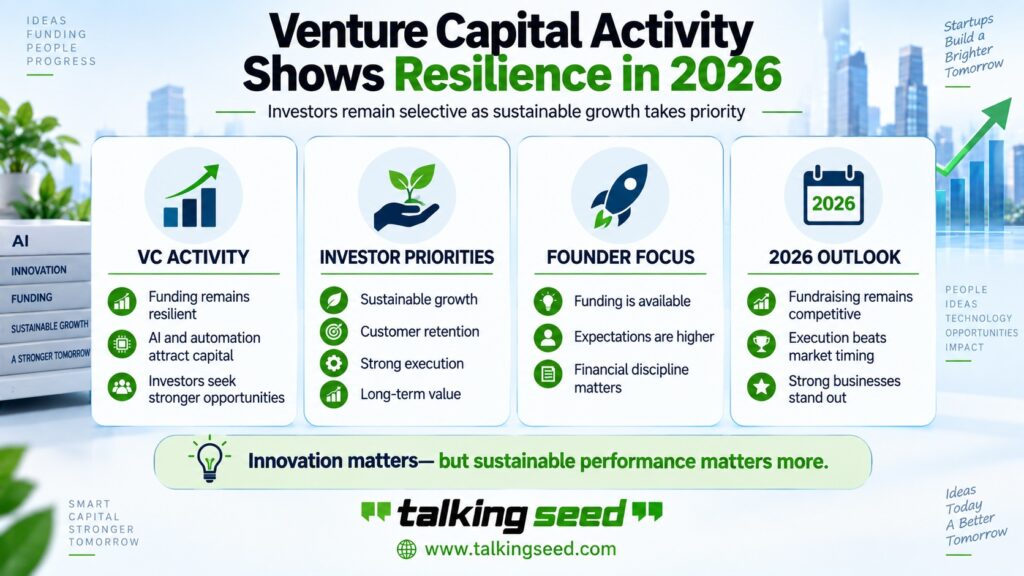
Despite these challenges, venture activity has shown signs of resilience throughout 2026. Investors continue to deploy capital into promising companies, particularly those leveraging artificial intelligence and automation technologies to address enterprise and consumer market needs.
Market participants say the current environment is creating a healthier investment landscape compared with the rapid funding cycles of previous years.
Investors Shift From Growth to Sustainable Performance
Rather than rewarding growth alone, investors are increasingly evaluating startups based on execution, market opportunity, customer retention, and long-term sustainability.
Many venture firms view this shift as a positive development that could lead to stronger businesses and more sustainable returns over time.
What the Fed Decision Means for Startup Founders
For startup founders, the message following the Federal Reserve’s latest decision is clear: funding remains available, but expectations have changed.
As venture capital markets continue adapting to a higher-rate environment, founders seeking investment will need to demonstrate not only innovation and growth potential but also operational discipline and a credible path to long-term value creation.
Execution Matters More Than Market Conditions
With interest rates remaining elevated and investors maintaining a cautious approach, the startup fundraising landscape is expected to remain competitive through the remainder of 2026.
Venture capital markets may be watching the Federal Reserve closely, but for founders, success will increasingly depend on execution rather than market conditions alone.